
A capsule wardrobe is a small collection of clothes that all work together. Instead of a closet packed with pieces you never wear, you keep fewer, better items, and every top matches every bottom. Getting dressed takes minutes, shopping gets simpler, and your wardrobe finally feels calm instead of chaotic.
This guide covers the capsule wardrobe essentials you actually need, the colours that tie them together, and the simple rules that keep a small closet working all year. It is written for real homes and real budgets, not for a perfect closet on a screen.
What a Capsule Wardrobe Really Is
A capsule wardrobe usually holds around 30 to 40 pieces, including shoes and coats, but not underwear or gym kit. The number matters less than the idea: everything in it earns its place. Each piece should work in at least three outfits, or it does not belong.
The idea suits busy people because it removes daily decisions. When every item goes with every other item, you stop standing in front of a full closet with nothing to wear. You pick a top, you pick a bottom, and you are done. That is the whole point.
A capsule wardrobe also saves money. You buy less, and you buy better. A well-made coat that lasts five winters costs less per wear than three cheap coats that lose their shape in a year. The same applies to shoes, knitwear, and bags.
The Essential Pieces
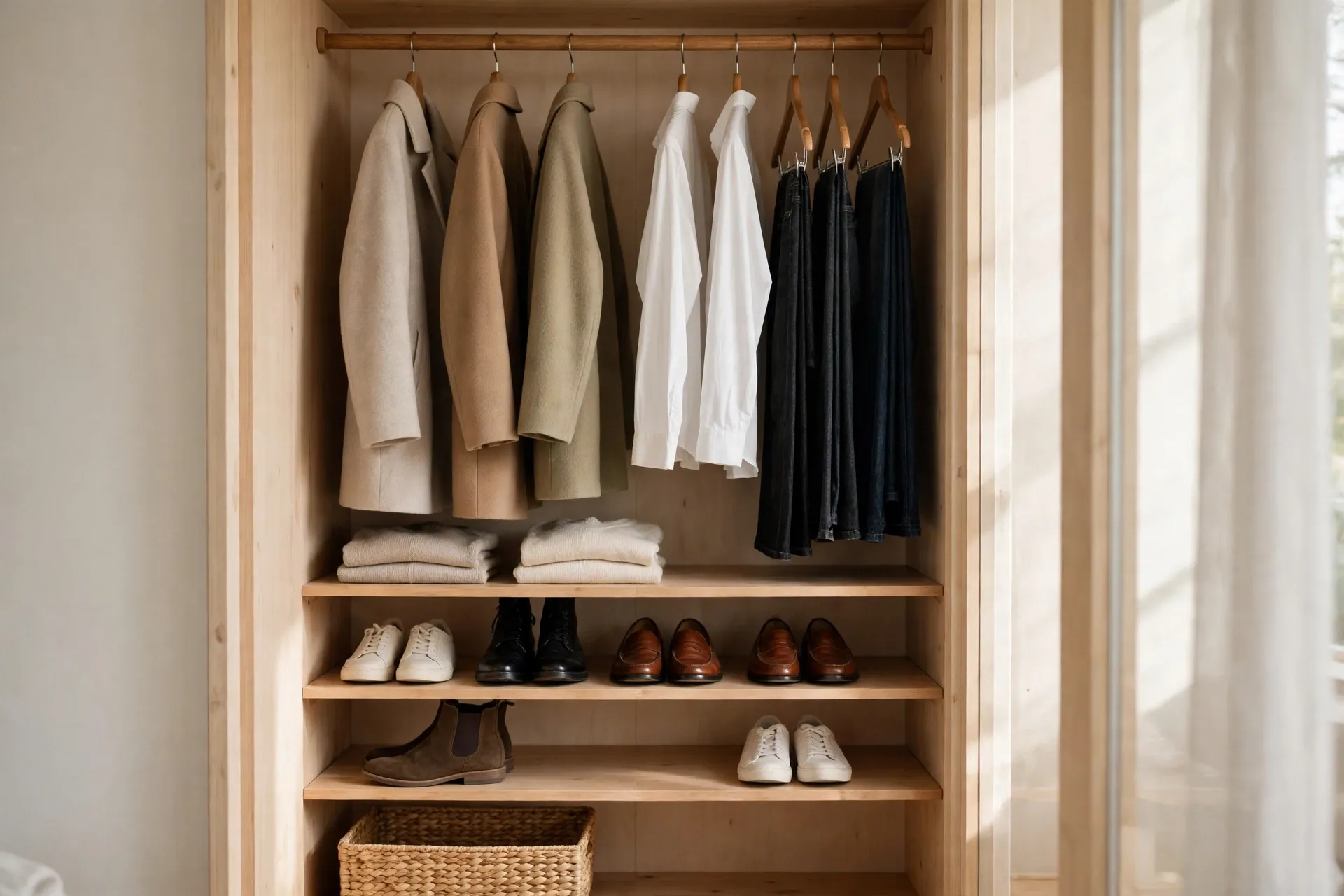
Start with the pieces you reach for most. A plain white shirt, a good pair of dark jeans, and a simple black dress cover more situations than a dozen statement pieces. Add a well-fitting blazer, a neutral knit jumper, and a classic trench or wool coat, and you have the backbone of the wardrobe.
Shoes need the same thinking. Most people need four pairs: comfortable trainers for everyday, smart flat shoes or loafers, a pair of ankle boots, and one dressier pair for evenings out. Keep them in neutral colours so they work with everything else you own.
Accessories finish the job. One good belt, one everyday bag, and one scarf in a colour you love can change an outfit without adding bulk to the closet. Choose accessories you will use weekly, not ones that sit in a drawer waiting for a special occasion.
Colours That Work Together
Colour is where most capsule wardrobes succeed or fail. Pick a base of three neutrals, such as black, navy, and grey, or white, camel, and navy. Every item you buy should sit inside that base, or match it easily.
Then add one or two accent colours. These are the colours that make the wardrobe feel like yours. It might be a soft sage green, a warm rust, or a classic burgundy. The accent appears in a few pieces, a scarf, a jumper, maybe a bag, and it lifts the neutrals without breaking the system.
A practical tip: hold a new item against three things you already own before you buy it. If it matches all three, it belongs in the capsule. If it only matches one, leave it on the rail. This one habit prevents most wardrobe mistakes.
Building Your Capsule Step by Step
Do not throw everything out and start again. That wastes money and rarely works. Instead, empty your closet onto the bed and sort everything into three piles: love and wear often, like but rarely wear, and never wear. The first pile is the start of your capsule. The third pile can go to charity or a clothes swap.
Next, look for the gaps. Most people find they own five black tops and no decent coat, or three pairs of jeans and no smart shoes. Write down the missing pieces, not the ones you fancy, and buy only from that list for the next three months.
Try a real-world example. Imagine your mornings are rushed and you always reach for the same jeans and jumper. Your capsule should be built around those two items, with three tops that match the jeans, a coat that fits over the jumper, and shoes that work with both. Build outward from what you actually wear, not from a list in a magazine.
Seasonal Swaps Without the Stress
A capsule wardrobe changes with the seasons, but only a little. In spring, swap heavy knitwear for lighter layers and add a rain-resistant jacket. In autumn, bring back the boots and the wool coat. Store the out-of-season pieces in a box on top of the wardrobe, not in a separate room where you forget them.
Keep a small list of what you stored, taped inside the wardrobe door. When the season turns, the list tells you exactly what is waiting for you. This simple step stops you buying a second navy jumper because you forgot the first one was in the box.
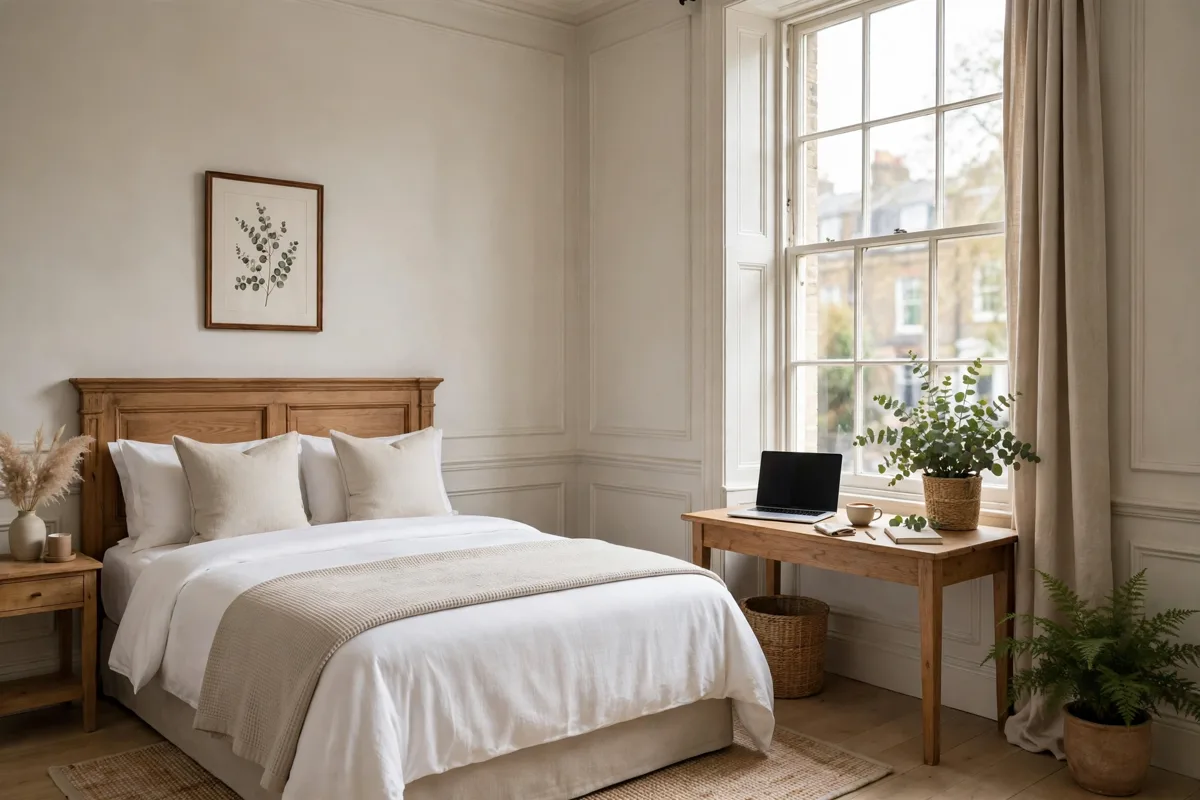
Your bedroom matters here too. A tidy closet works best in a tidy room, and a few home touches make getting dressed easier. Good lighting helps you see colours properly, and our guide to home lamps for every room explains how to light a bedroom so colours look true. A full-length mirror and a small chair for laying out tomorrow’s outfit help as well. Our accent chairs guide shows how one chair can turn a corner of the bedroom into a proper dressing spot.
Where Your Wardrobe Lives
A capsule wardrobe needs a home that works as hard as the clothes do. Keep everyday pieces at eye level and in easy reach. Put occasion wear higher up, and shoes on a low rack where you can see them all at once.
Storage furniture makes a real difference. A solid wardrobe with good hanging space beats a rail in the corner, and drawers keep knitwear in shape. Our guide to bedroom furniture covers the pieces that make a small bedroom work harder, from beds with storage to bedside tables that hold the things you reach for first.
Colour coordination does not stop at clothes. The room itself should feel calm, and soft furnishings help. Curtains for every room shows how window dressings set the tone of a bedroom, and a rug for every room warms up a bare floor on cold mornings. Even small details count: a candle on the dressing table makes the morning routine feel less rushed, and our candle holders guide has ideas that suit any bedroom style.
A Smaller Closet That Does More
A capsule wardrobe is not about owning less for its own sake. It is about owning the right things, in colours that work together, stored in a room that makes mornings easy. Start with what you already wear, fill only the real gaps, and let the system prove itself over one season.
Try it for three months. Keep a note of the mornings that felt easy and the pieces you reached for most. By the end of the season, you will know exactly which items earned their place, and your next shopping trip will be the shortest one you have ever taken.