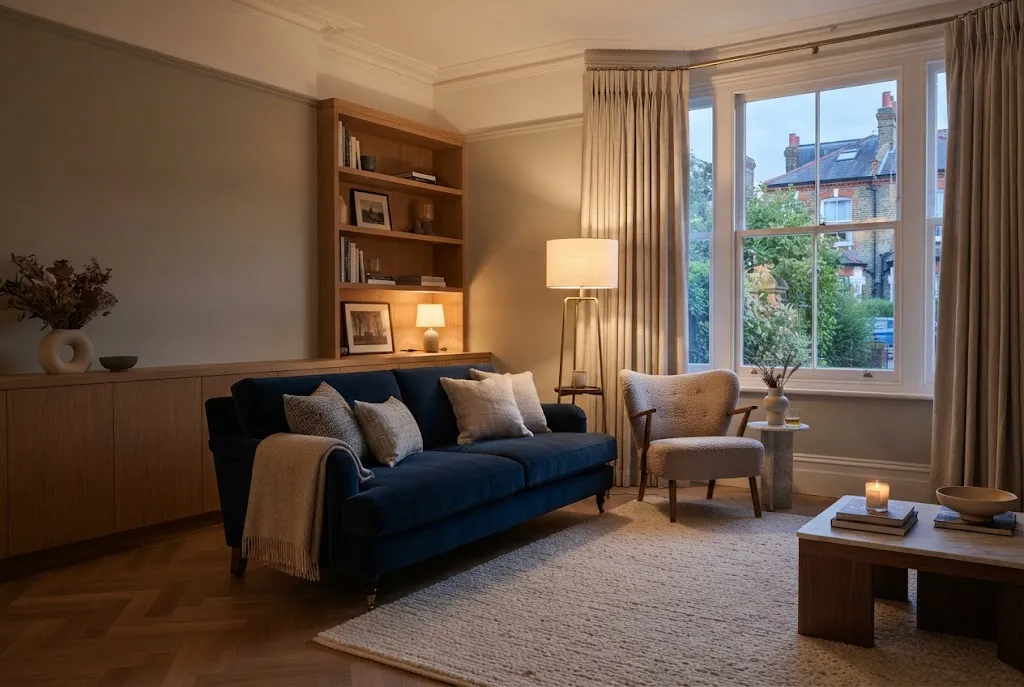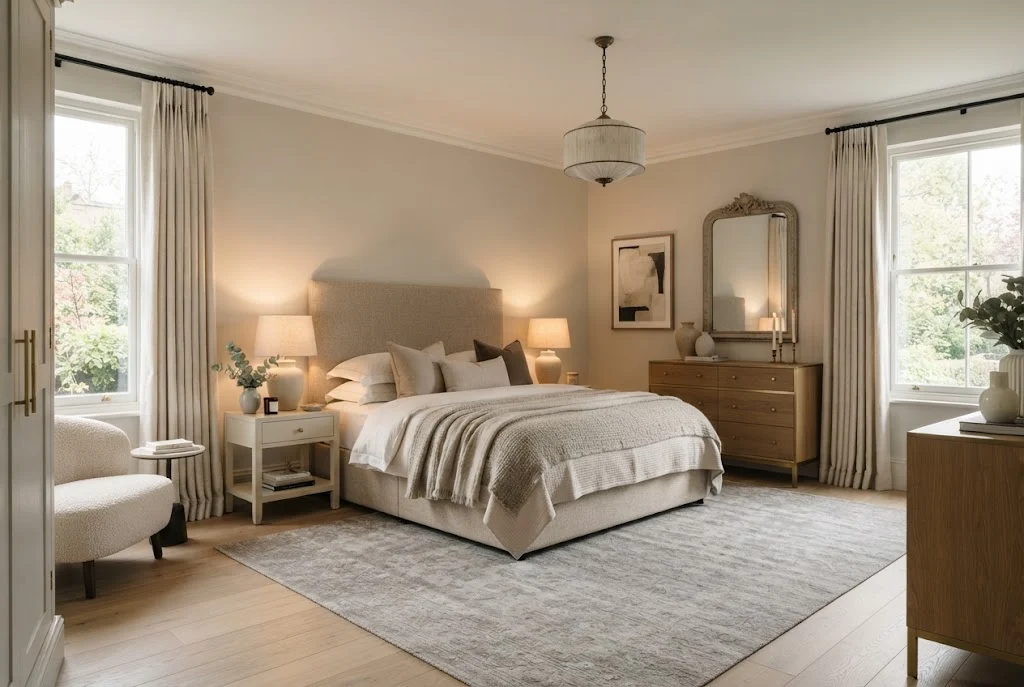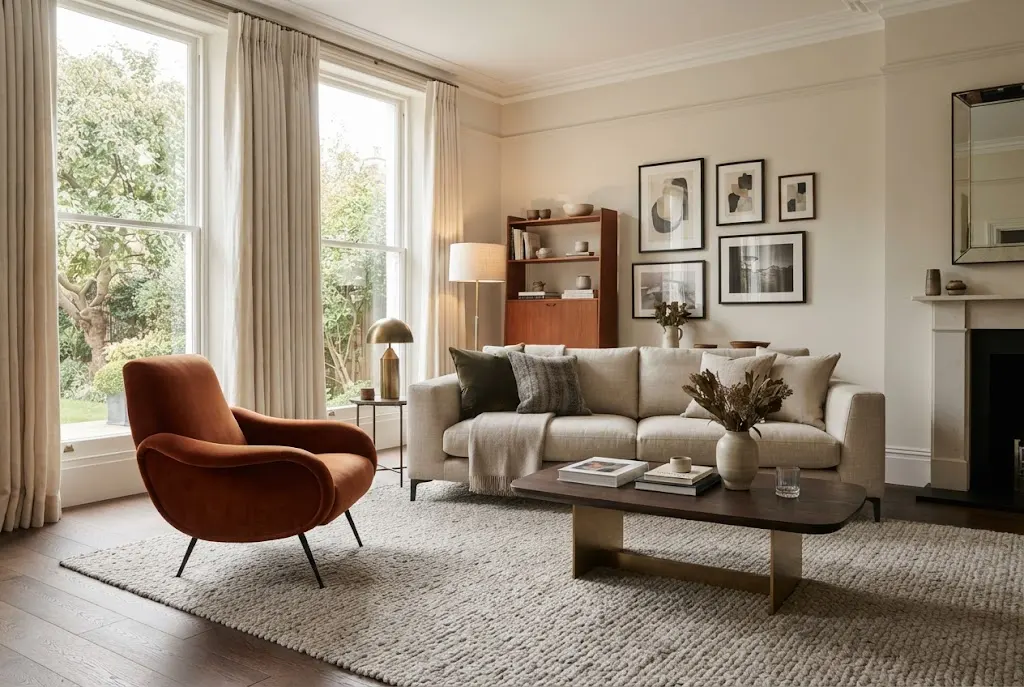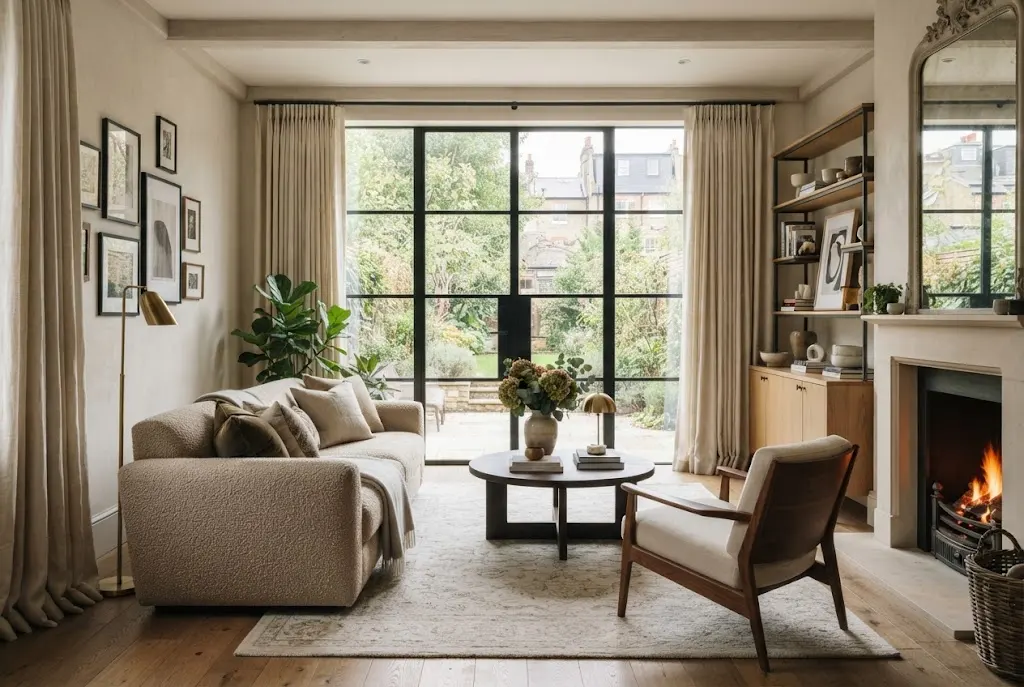

The right chair should suit both the room and the way you intend to use it. A substantial armchair can create a comfortable reading or conversation area in a living room, while small bedroom chairs may provide somewhere to sit without taking over limited floor space. Colour, upholstery, proportions and placement all matter when creating a balanced interior.
How to Choose Accent Chairs
Before choosing an accent chair, consider the size of the room and the furniture already in place. A chair that looks appropriately proportioned in a large showroom may feel oversized in a compact bedroom.
Measure the available floor area and think about how much space is needed around the chair for comfortable movement. You should also consider the chair’s height in relation to nearby sofas, tables and other furniture.
Style is another important consideration. A contemporary room may suit a clean-lined chair, while a more traditional interior could benefit from curved upholstery or classic detailing. The chair does not need to match the sofa exactly. In many cases, contrast is what gives an accent chair its character.
Accent Chairs for Living Room Spaces
Accent chairs for living room interiors can create additional seating while helping divide a larger space into functional zones. One or two chairs positioned opposite or beside a sofa can form a comfortable conversation area.
In an open-plan room, a chair can also help define a smaller reading or relaxation zone. Positioning it near a floor lamp, side table or window can make the area feel intentional rather than simply filling an empty corner.
When selecting the colour, look at the existing room palette. A neutral chair can quietly complement colourful décor, while a stronger shade can become the room’s main accent. If the living room already features a statement rug, consider choosing a chair that picks up one of its secondary tones.
Accent Armchairs for Living Room Comfort
Accent armchairs for living room arrangements are especially useful when comfort is as important as appearance. Armrests provide additional support and can make the chair suitable for longer periods of reading, conversation or relaxation.
When comparing armchairs, look at the seat depth, back height and armrest design rather than judging the chair solely by its appearance. A visually attractive chair is more useful when its proportions also suit the person who will use it.
Upholstery can further influence the character of the room. Soft neutral fabrics can create a relaxed appearance, while richer textures can add visual depth. If the surrounding furniture is relatively plain, an upholstered accent armchair can become a natural focal point.
Accent Chairs for Bedroom Interiors
Accent chairs for bedroom spaces can turn an unused corner into a practical seating area. A chair beside a window can provide a comfortable place to read, while one positioned near a dressing area can be useful when getting ready.
Bedroom chairs should generally support the calm atmosphere of the room. Soft fabrics, muted colours and comfortable proportions can work particularly well alongside beds and other bedroom furniture.
If the bedroom already contains several colours and patterns, consider a simpler chair. Conversely, a neutral bedroom provides more freedom to introduce a distinctive chair through colour, texture or shape.
Choosing a Bedroom Armchair
A bedroom armchair can provide both comfort and a decorative focal point. It is particularly useful in larger bedrooms where there is enough space to create a dedicated sitting area.
Placement is important. Avoid positioning an armchair where it blocks wardrobe doors, drawers or the main walking route. A corner near natural light can be an effective location, particularly when combined with a small side table and suitable lighting.
If the room is already furnished with a substantial bed and large storage pieces, choose an armchair with proportions that do not visually overwhelm the space.
Small Bedroom Chairs for Compact Rooms
Small bedroom chairs are useful when floor space is limited. A compact chair can provide seating without making the room feel crowded, particularly when placed beside a window or in an unused corner.
When shopping for small chairs for a bedroom, pay attention to the overall footprint rather than simply the width of the seat. A chair with a wide back, deep seat or large arms may require more space than its basic dimensions suggest.
Light visual designs can also help a small bedroom feel more open. Slim legs, compact frames and upholstery in a colour that complements the surrounding walls can reduce the sense of visual weight.
Choosing Colours for Accent Chairs
Colour is one of the easiest ways to make an accent chair stand out. However, the most successful colour choices usually relate to something already present in the room.
For example, a blue chair can connect with blue details in a rug or curtains, while a warm cream chair can complement neutral flooring and furniture. You do not need an exact colour match. Slight variations can create a more layered and sophisticated result.
If you are using a bold chair, keep some of the surrounding elements relatively restrained. This gives the chair room to become a focal point without making the entire room feel visually busy.
How Accent Chairs Work with Rugs
Rugs and chairs can work together to define a seating area. A chair positioned partly on a rug can visually connect it with a sofa and coffee table, while a chair just outside the rug can create a separate zone.
When choosing both items, consider their combined pattern and colour. A patterned chair can work well with a plain rug, while a textured or colourful rug may be better paired with a simpler upholstered chair.
For more ideas on coordinating floor coverings with furniture, see our guide to rugs for different rooms.
Pairing Chairs with Curtains
Window treatments can influence how an accent chair looks within a room. Because curtains often occupy a significant visual area, their colour and texture should be considered when choosing upholstery.
A chair does not need to match the curtains exactly. Instead, select related tones or contrasting shades that work naturally together. For example, blue-grey curtains can complement a chair in a warmer neutral tone, while cream curtains can provide a flexible background for stronger upholstery.
Our guide to curtains for different rooms can help when planning the wider colour scheme around your seating.
Accent Chairs and Bedroom Furniture
In a bedroom, an accent chair should feel connected to the larger furniture arrangement. Consider the bed, bedside tables, storage units and any dressing furniture before selecting a chair.
For example, a wooden bedside table can provide a natural material contrast against an upholstered chair. Alternatively, a chair with subtle wood details can connect visually with existing timber furniture.
If you are furnishing the room from scratch, plan the chair alongside your bedroom furniture rather than treating it as a last-minute addition.
Lighting Around Accent Chairs
Lighting can turn an accent chair into a genuinely useful part of a room. A reading chair beside a suitable lamp creates a dedicated zone for reading or relaxing, while a chair near a window can benefit from natural daylight during the day.
A floor lamp can work particularly well beside an accent chair because it provides focused illumination without requiring a large table. Choose a lamp whose scale and finish complement the chair and surrounding furniture.
What to Consider Before Buying an Accent Chair
Before purchasing an accent chair, consider the following practical details:
- Measure the space: Check width, depth and height as well as the available clearance around the chair.
- Consider comfort: Look at seat depth, cushioning, back support and armrest height.
- Think about placement: Make sure the chair does not obstruct doors, drawers or walkways.
- Match the room: Consider existing rugs, curtains, flooring and furniture.
- Choose suitable upholstery: Select a material that suits how frequently the chair will be used.
- Plan the lighting: Consider whether the chair will need a nearby lamp or other light source.
It is also worth checking how the chair will enter the room before buying. Doorways, staircases and narrow hallways can sometimes make large furniture difficult to deliver or position.
Creating a Balanced Seating Area
The strongest interiors usually combine furniture of different shapes and sizes rather than placing identical pieces throughout the room. An accent chair can provide contrast while still belonging to the same overall design.
Try to maintain a visual connection between the chair and the rest of the room through colour, material or shape. For instance, a curved chair can soften a room dominated by straight furniture, while a darker chair can provide contrast against lighter walls and flooring.
Keep enough open space around the chair for comfortable movement. A well-designed seating area should feel inviting rather than crowded.
Final Thoughts on Choosing Accent Chairs
The right accent chairs can provide extra seating, define unused areas and introduce a distinctive finishing touch to living rooms and bedrooms. From accent armchairs for living room arrangements to a compact bedroom armchair, the best choice depends on the room’s size, purpose and existing décor.
Small bedroom chairs can make compact spaces more functional, while larger accent chairs can create comfortable reading or conversation areas in spacious rooms. Colour, upholstery, proportions and placement should all work together rather than being considered separately.
For a cohesive interior, consider your chair alongside rugs, curtains, bedroom furniture and lighting. When these elements complement one another without being perfectly matched, the result can feel comfortable, practical and intentionally designed.