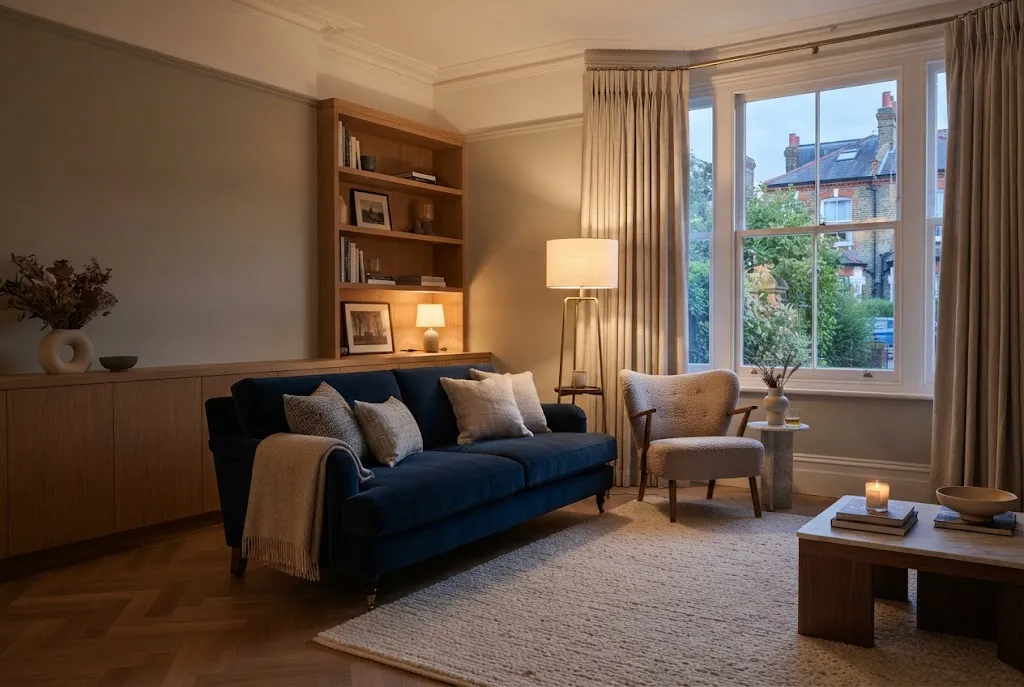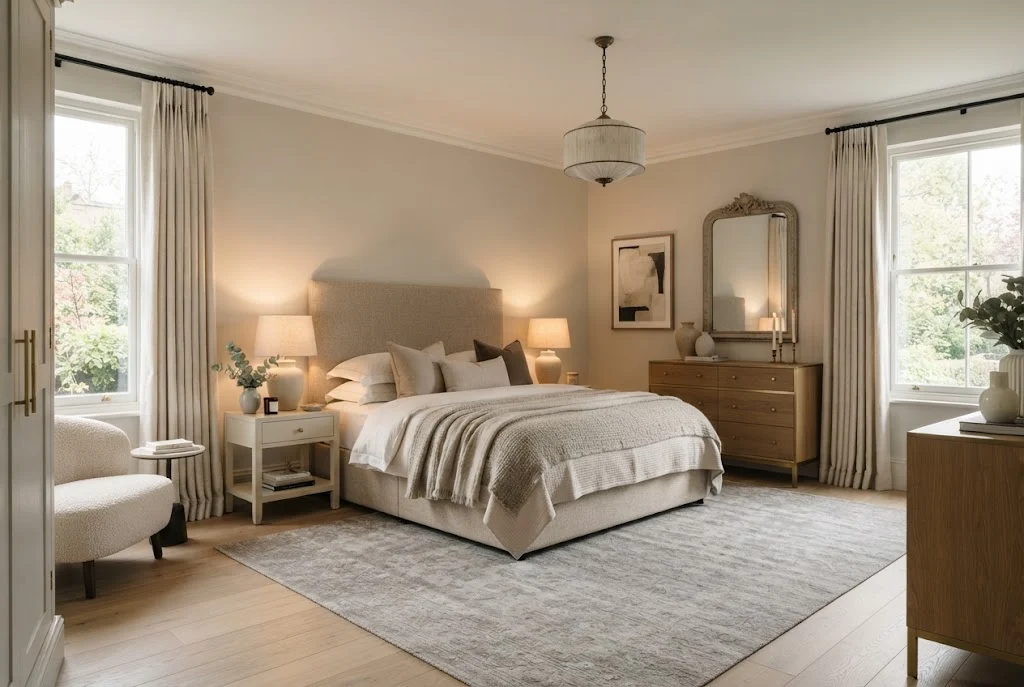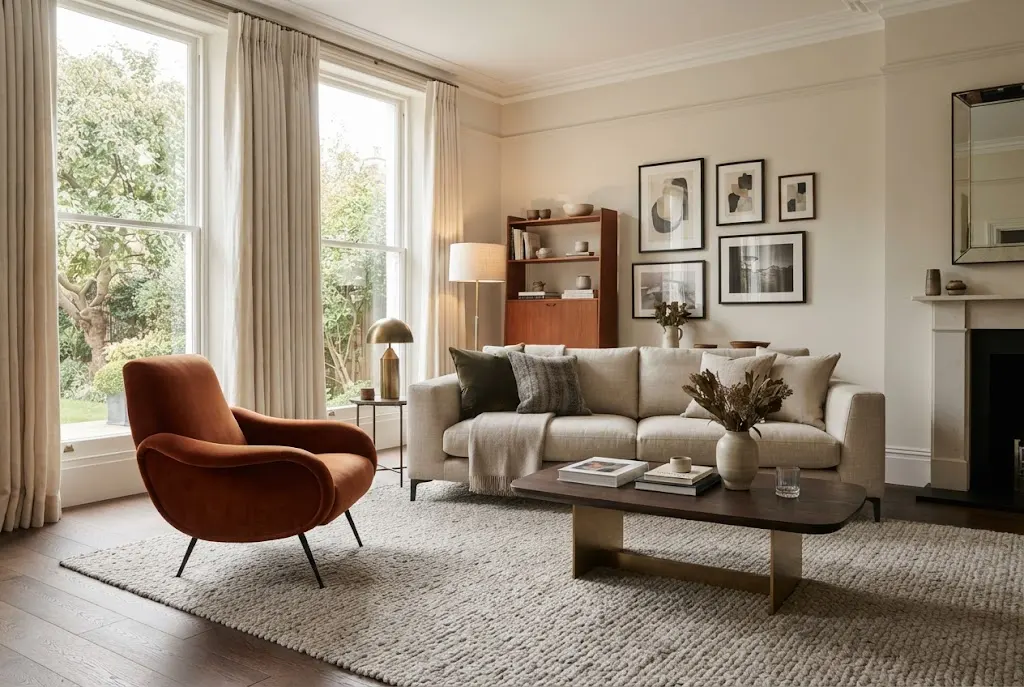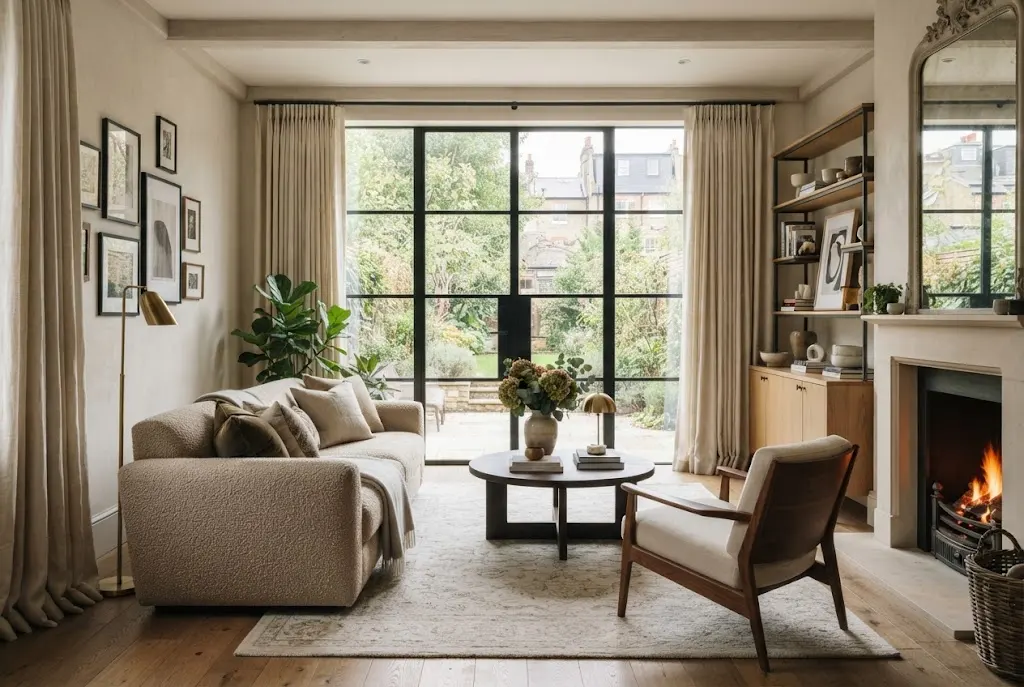

There are many ways to use curtains throughout a home. Neutral designs can create a calm backdrop, while textured curtains add depth and visual interest. More decorative options, such as gold coloured curtains or green and gold curtains, can become a statement feature. The key is to consider the room’s existing colours, furniture, natural light and overall proportions before making a choice.
How to Choose Curtains for Your Home
The best curtains complement the architecture and décor of the room rather than competing with it. Start by considering the window size and position, then look at the colours already used in flooring, furniture, walls and accessories.
Length is equally important. Full-length curtains can make windows appear taller and create a more polished appearance, while shorter treatments may be practical in rooms where furniture or work surfaces sit directly beneath a window.
Also consider how frequently the curtains will be opened and closed. A decorative curtain may work well in a formal setting, whereas a busy family room may benefit from a fabric that is easier to handle and maintain.
Lounge Curtains for Comfortable Living Rooms
Lounge curtains are an important part of a living room because they occupy a large area of the wall and can influence the entire colour scheme. They can soften hard architectural lines while helping frame the main seating area.
Neutral lounge curtains are particularly versatile. They can work with a range of sofa colours and make it easier to change cushions, rugs and decorative accessories later without replacing the window treatment.
For a more distinctive interior, patterned or textured curtains can introduce character. If your living room already includes a statement rug, such as a cream or colourful rug, consider whether the curtain fabric should provide contrast or repeat one of its softer tones.
Curtain Style for Bedroom Interiors
Finding the right curtain style for bedroom spaces involves more than choosing an attractive colour. Bedrooms usually benefit from a combination of comfort, privacy and visual calm.
Soft neutral shades can create a relaxed atmosphere, while heavier fabrics may provide a more substantial appearance. If the bedroom already contains several textures, a relatively simple curtain can prevent the room from feeling visually busy.
For a coordinated bedroom, think about curtains alongside the bed, bedside tables and other furnishings. Matching every item exactly is unnecessary. Instead, use related tones and textures to create a cohesive look.
Textured Curtains for Added Depth
Textured curtains are an effective option when you want a room to feel more layered without introducing a strong pattern. Subtle woven finishes, tactile fabrics and gentle surface variations can catch natural light and add depth to otherwise simple interiors.
Texture can be especially useful in neutral rooms. A cream or beige curtain with a subtle texture can feel considerably richer than a completely flat fabric while maintaining a restrained colour palette.
When combining textures, avoid using too many competing finishes. A textured curtain can work beautifully with a simple rug, upholstered furniture and understated accessories.
Cream Color Living Room Curtains
Cream color living room curtains are a flexible choice for homeowners who want a bright and timeless interior. Cream works particularly well with natural wood, warm neutrals, white walls and soft furnishings in muted colours.
Cream curtains can also help maintain a sense of visual continuity when the room already contains several colours. Rather than creating another strong focal point, they provide a soft backdrop around the windows.
If the living room includes a cream rug, consider choosing curtains with a slightly different tone or texture. This prevents the two surfaces from looking overly matched while still keeping the room visually connected.
Gold Coloured Curtains for a More Decorative Look
Gold coloured curtains can introduce warmth and a more luxurious character to a room. Depending on the fabric and shade, gold can range from subtle champagne tones to deeper metallic-inspired hues.
Because gold is visually noticeable, it often works best when the rest of the room provides some restraint. Neutral walls, simple furniture and understated accessories can allow the curtains to become the main decorative feature.
Gold does not need to be paired exclusively with other metallic finishes. It can also work with cream, beige, deep blue, green and natural wood tones.
Green and Gold Curtains
Green and gold curtains combine a natural colour with a warm decorative accent. This pairing can create a distinctive look in living rooms, bedrooms or other areas where you want the window treatment to make a stronger visual statement.
Deep green can create a dramatic effect, while softer green shades can feel lighter and more relaxed. Gold detailing or warmer undertones can then provide contrast.
When using this combination, repeat small elements of the green or gold elsewhere in the room rather than matching everything. Cushions, artwork, lamps or decorative accessories can provide subtle connections.
Kitchen Curtain Ideas
A kitchen curtain needs to combine style with practicality. Kitchens can experience moisture, cooking vapours and occasional splashes, so the window treatment should suit the environment and be straightforward to maintain.
For this reason, many homeowners prefer relatively simple designs in kitchen spaces. A lightweight curtain can soften a window without making the room feel enclosed, while a carefully selected pattern can introduce colour to a neutral kitchen.
Window Curtains for the Kitchen
Window curtains for the kitchen should be chosen according to the position of the window and nearby appliances or work surfaces. Curtains that sit close to cooking areas require particular consideration because fabric should not interfere with safe kitchen use.
Colour is another useful tool. A neutral kitchen can benefit from curtains that introduce muted blue, green, cream or warm natural tones. If the room already contains strong cabinetry or patterned surfaces, simpler curtains can help maintain balance.
Drapes for Doors
Drapes for doors can be used where large glazed doors or openings need additional privacy, light control or decorative framing. They can be particularly effective around patio doors and other wide openings because they soften large expanses of glass.
When choosing door drapes, pay attention to how the doors operate. The fabric should allow the doorway to be used comfortably without creating an obstruction. Full-length designs can create an elegant appearance, but they need to be measured carefully.
For wide openings, consider how much fabric is required to achieve the desired fullness. The finished effect should look intentional when the drapes are open as well as when they are closed.
Blue Grey Drapes for Modern Interiors
Blue grey drapes can provide a sophisticated middle ground between cool blue and neutral grey. This makes them useful in contemporary interiors where you want some colour without introducing a highly saturated shade.
Blue-grey curtains can complement white walls, pale flooring, natural timber and darker furniture. They can also work particularly well alongside soft blue accessories or neutral rugs.
If your room already includes a blue rug or blue-toned upholstery, choose a curtain shade that complements rather than exactly matches those elements. Slight variations in tone generally make the finished room feel more natural.
How Curtains Work with Rugs
Curtains and rugs often occupy two of the largest textile areas within a room, so considering them together can make the entire interior feel more coordinated.
A patterned rug can be balanced with plain curtains, while understated flooring can give you more freedom to choose a textured or decorative curtain. You can also connect the two through colour without using identical patterns.
For example, a neutral rug can support green and gold curtains, while a blue-grey rug can work with similarly toned drapes. The goal is harmony rather than perfect matching.
Pairing Curtains with Accent Chairs
Furniture can reinforce the colour relationships established by your curtains. If you are adding accent chairs for the living room, consider choosing upholstery that complements one of the secondary colours in the curtains.
This approach is especially useful when working with statement curtains. Instead of introducing several unrelated colours, repeat one subtle tone through a chair, cushion or decorative accessory.
In bedrooms, a curtain can similarly coordinate with a bedroom armchair or small bedroom chair, creating a cohesive reading or relaxation area without requiring every item to come from the same furniture range.
Lighting Can Change How Curtains Look
Natural and artificial lighting can significantly affect how curtain colours appear. A fabric that looks soft and neutral during the day may appear warmer under evening lighting.
Before making a final decision, consider the direction of the window and how much daylight enters the room. It is also useful to view fabric samples at different times of day if possible.
For rooms that need additional evening lighting, a floor lamp can provide a practical secondary light source while contributing to the overall décor.
What to Consider Before Buying Curtains
Before ordering curtains, work through the practical details as well as the visual design:
- Measure carefully: Check the window or door width and the required drop.
- Consider the fabric: Think about weight, texture, maintenance and how the material hangs.
- Check the room’s colours: Consider walls, flooring, rugs and furniture before selecting a shade.
- Think about light: Decide how much natural light and privacy you need.
- Consider the fitting: Make sure the chosen curtain style works with the existing or planned track or pole.
- Plan for everyday use: Curtains should open and close comfortably where required.
Taking these details into account can make the difference between curtains that simply cover a window and curtains that genuinely improve the room.
Final Thoughts on Choosing Curtains
The right curtains can bring together a room’s colour, texture and furniture while providing useful privacy and light control. From versatile lounge curtains and a calming curtain style for bedroom interiors to practical kitchen curtain ideas, there are options for every part of the home.
Textured curtains can add depth, cream color living room curtains can create a timeless backdrop, and gold coloured curtains can introduce a more decorative character. Green and gold curtains provide a stronger statement, while blue grey drapes can give contemporary rooms a refined appearance.
For the best result, treat curtains as part of the wider interior rather than an isolated purchase. Consider them alongside rugs, accent chairs, bedroom furniture and lighting so that each element contributes to a comfortable and cohesive home.