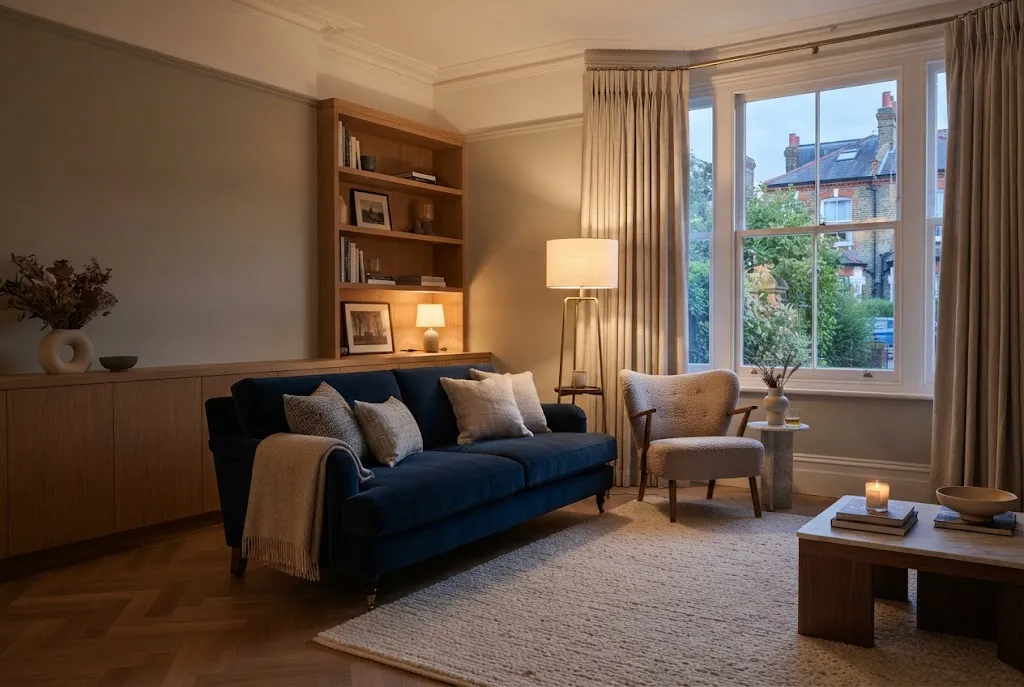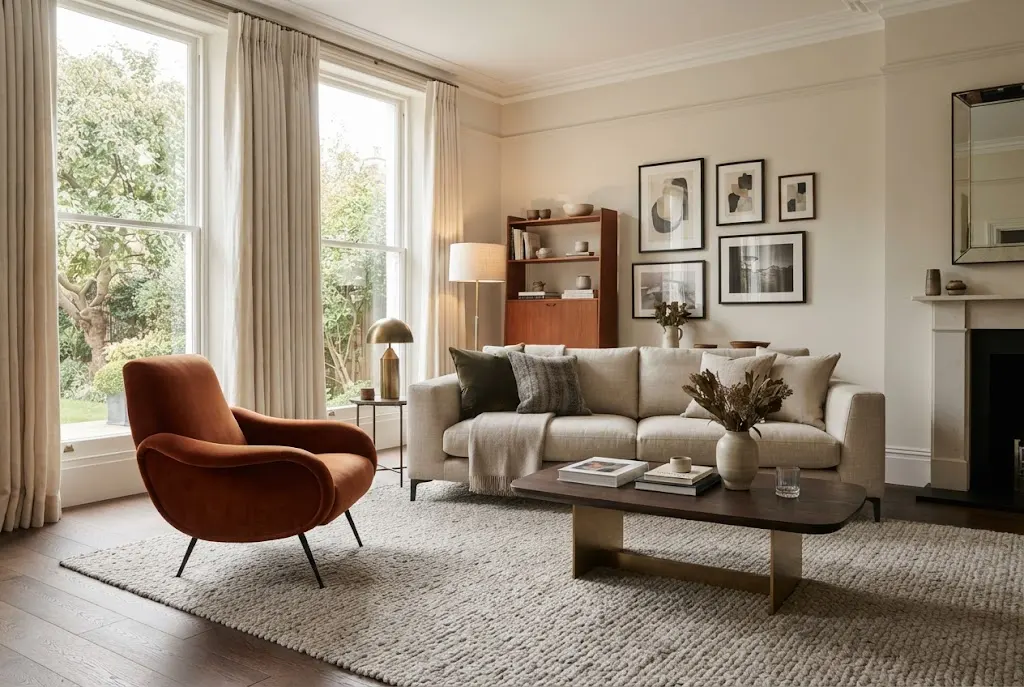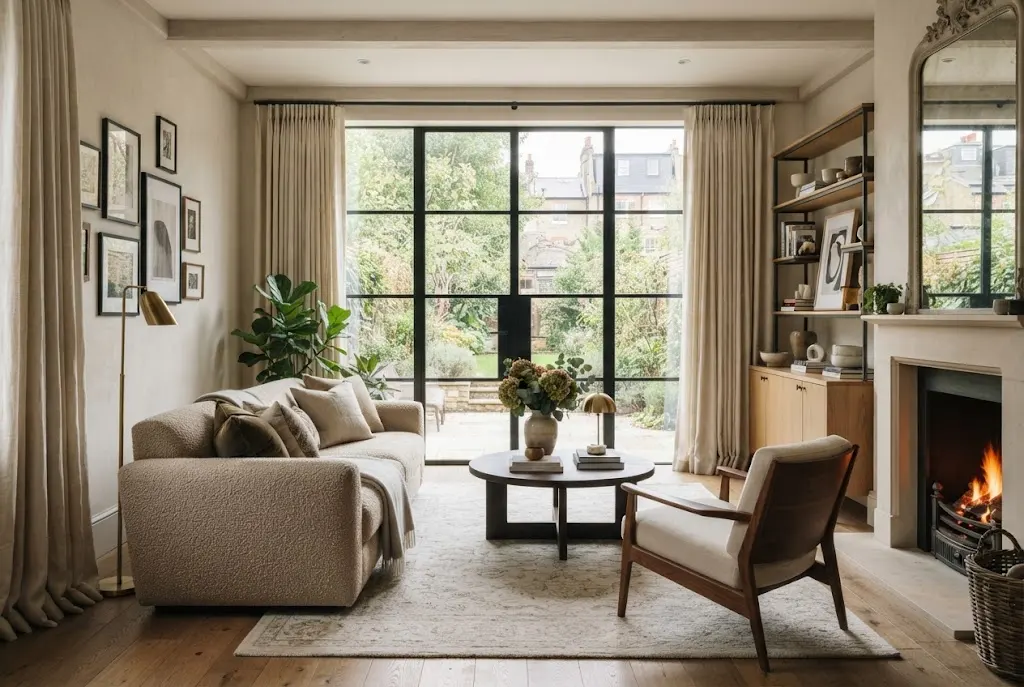

Modern floor lamps are available in many shapes and finishes, from simple designs with a traditional floor lamp stand to decorative gold models and practical shelf floor lamps. The best option depends on the room, the available floor space, the type of lighting required and how the lamp fits with existing furniture and décor.
How to Choose a Floor Lamp
Start by deciding what you want the lamp to do. A reading area may need more focused illumination, while a living room corner may benefit from softer ambient light. Once the purpose is clear, consider the lamp’s height, base size, shade design and overall style.
Floor space is another important consideration. A lamp with a large base can become awkward in a narrow walkway, while a slim design can provide useful lighting without occupying much room.
Also consider the furniture around it. A floor lamp should complement nearby sofas, chairs, rugs and tables without competing with them. Its finish can either blend into the existing scheme or provide a deliberate accent.
Choosing the Right Floor Lamp Stand
A floor lamp stand provides the structural base for the light and can have a significant effect on the overall appearance. Slim metal stands can create a light contemporary look, while wider or more decorative bases may feel more substantial.
When selecting a stand, think about stability as well as appearance. The base should be suitable for the floor surface and positioned where it will not easily be knocked or become an obstruction.
Height matters too. A tall stand can distribute light across a larger area, while a shorter lamp may be better suited to a reading chair or compact seating arrangement.
Floor Lamp Gold Designs
A floor lamp gold finish can add warmth and a decorative accent to a living room, bedroom or hallway. Gold works particularly well when used as a controlled detail rather than being repeated across every surface.
A gold lamp can complement cream, beige, white, deep green, blue and natural wood tones. This makes it relatively easy to introduce into an existing interior without redesigning the entire room.
If the room already contains gold details in curtain hardware, decorative accessories or furniture, a gold floor lamp can create visual continuity. However, matching every metallic finish exactly is not necessary.
What Does a Floor Lamp Lamp Mean?
The phrase floor lamp lamp is sometimes used when people are searching for a complete floor-standing lighting fixture rather than a replacement light source or individual component. When comparing products, it is useful to check whether the listing includes the complete stand, shade and compatible light fitting.
Product specifications should also be checked for dimensions, bulb compatibility, electrical requirements and any installation instructions. These details are more important than appearance alone because they determine whether the lamp will work safely and comfortably in the intended location.
Shelf Floor Lamp Designs
A shelf floor lamp combines lighting with useful display or storage space. This can make it particularly appealing in rooms where floor and surface space are limited.
The shelves can provide a place for small books, decorative objects, plants or other lightweight items, depending on the manufacturer’s recommendations. This creates a functional feature rather than simply adding another decorative object to the room.
When using a shelf lamp, avoid overcrowding the shelves. Leaving some open space allows the design to remain visually light and makes the lamp itself easier to appreciate.
Floor Lamp with Shelf for Small Spaces
A floor lamp with shelf can be especially useful in compact living rooms, bedrooms and reading corners. Combining two functions in one piece can reduce the need for a separate side table and lamp.
For example, a floor lamp with shelf beside an accent chair can provide both illumination and a convenient surface for a small decorative item or book. In a bedroom, it may provide an alternative to a traditional bedside arrangement when floor space allows.
Before buying, measure the complete footprint rather than only the width of the stand. Shelves can extend beyond the central frame and may require additional clearance.
Lamp with Shelves for Living Rooms
A lamp with shelves can help create a practical focal point in a living room. It combines vertical lighting with horizontal display areas, making it useful in corners that might otherwise remain empty.
Positioning is important. A lamp with shelves can work beside a sofa or chair, but it should not interfere with movement around the seating area. Keep cables away from walkways and follow the manufacturer’s electrical and placement instructions.
For a more cohesive look, use the shelves to repeat small elements already present in the room. A book, plant or decorative object can connect the lamp with the surrounding colour scheme.
Using a Floor Lamp Beside an Accent Chair
A reading or relaxation corner is one of the most natural places for a floor lamp. Positioning a lamp beside an upholstered chair can provide focused illumination while creating a visually complete seating zone.
If you are adding an accent chair, consider the two pieces together. A simple chair can be paired with a more distinctive lamp, while a statement chair may benefit from a cleaner and less visually dominant light.
Allow enough space between the chair and lamp for comfortable movement. The lamp should be accessible without requiring you to reach across the seating area.
Pairing Floor Lamps with Bedroom Furniture
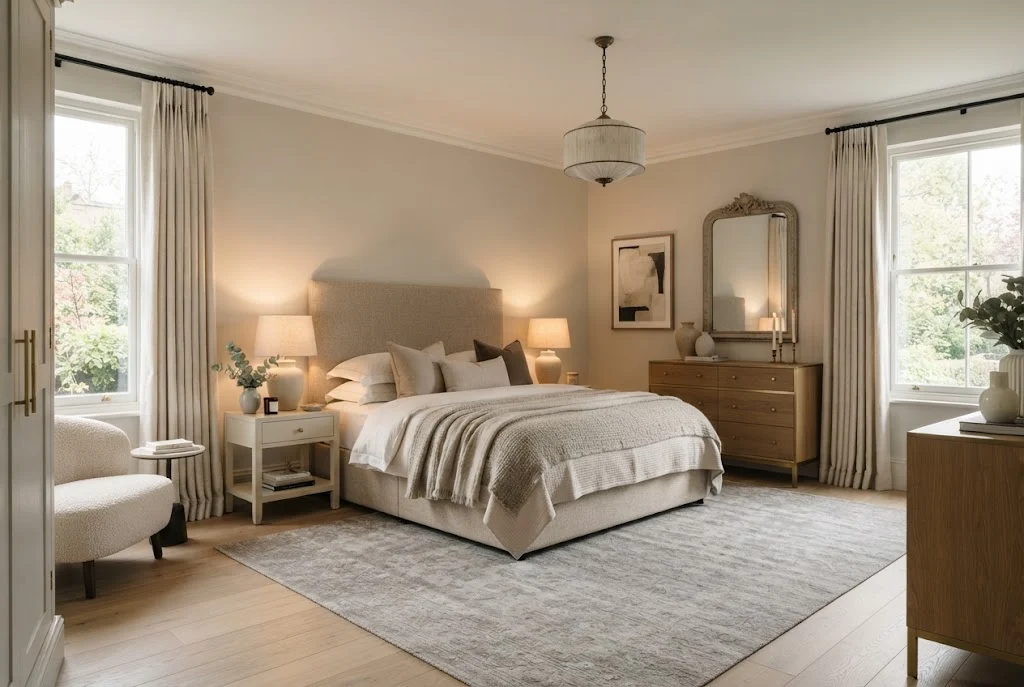
Bedrooms can benefit from floor lighting when there is enough space around the bed and other furniture. A tall lamp in a corner can provide ambient light, while a smaller reading-oriented design can work beside a bedroom chair.
When planning the room, consider the lamp alongside your bedroom furniture. A lamp with shelves may reduce the need for a separate small table, while a slim traditional lamp can fit neatly beside a chest of drawers or seating area.
Be careful not to position a lamp where it blocks drawers, wardrobe doors or normal walking routes. The best lighting arrangement is one that improves the room without making it less practical.
Coordinating Floor Lamps with Rugs
Floor lamps and rugs often work together naturally because both can help define a particular zone within a larger room. A lamp beside a chair positioned on a rug can visually establish a reading or relaxation area.
Consider the relationship between the lamp’s base and the rug. A stable base should sit securely on the flooring and should not create an unnecessary trip hazard at the edge of the rug.
If you are planning the complete seating arrangement, our guide to rugs for different rooms can help with selecting appropriate sizes, colours and styles.
How Curtains Affect Lighting
Window treatments influence how much natural light enters a room, which can affect the role of your floor lamp. During daylight hours, curtains may provide enough natural illumination, while the floor lamp becomes more important during evenings.
A lamp can also complement the decorative effect of curtains. For example, a gold lamp can work with warm neutral window treatments, while a simple black or metal design can contrast with softer curtains.
When coordinating both elements, focus on complementary finishes rather than exact colour matching. Our curtains guide includes ideas for combining window treatments with wider interior décor.
Where to Place a Floor Lamp
Placement should be based on both function and safety. Common locations include:
- Beside a sofa: Useful for ambient lighting or reading.
- Next to an accent chair: Creates a dedicated reading or relaxation area.
- In a living room corner: Helps illuminate darker areas.
- Beside bedroom seating: Provides useful light without occupying a bedside surface.
- Near a display area: Can highlight decorative features when designed for suitable illumination.
Keep the lamp away from locations where it could be knocked easily. Cables should be routed safely and should not cross regular walking paths.
What to Consider Before Buying a Floor Lamp
Before choosing a floor lamp, consider these practical points:
- Purpose: Decide whether you need reading, task or ambient lighting.
- Height: Choose a height that suits nearby furniture and the desired light distribution.
- Base: Check that it is stable and appropriate for the available floor area.
- Finish: Consider whether gold, wood, black, white or another finish complements the room.
- Bulb compatibility: Check the fitting and maximum permitted wattage according to the manufacturer’s specifications.
- Storage: If choosing a shelf design, check shelf dimensions and recommended load.
- Placement: Ensure the lamp and cable will not obstruct doors or walking routes.
It is also worth considering how the lamp will look when switched off. Because floor lamps can be substantial decorative objects, their design should work with the room throughout the day.
Creating a Layered Lighting Scheme
A floor lamp does not have to provide all the lighting in a room. It can work alongside ceiling fixtures, table lamps and natural daylight to create layers of illumination.
This approach gives you more control over the atmosphere. Brighter task lighting can support reading or other activities, while softer lamps can provide a more relaxed evening environment.
Using different light sources also helps prevent a room from feeling dependent on one central fixture. A floor lamp positioned in a darker corner can distribute light more evenly throughout the space.
Final Thoughts on Choosing a Floor Lamp
The right floor lamp can combine practical lighting with a strong decorative presence. A simple floor lamp stand can suit a minimalist interior, while a floor lamp gold finish can introduce warmth and visual interest.
Shelf floor lamp designs and a floor lamp with shelf can add useful display space, making them particularly practical where every square metre matters. Meanwhile, a lamp with shelves can help transform an unused corner into a functional part of the room.
For the best result, consider lighting as part of the wider interior rather than a standalone purchase. Coordinate your lamp with accent chairs, bedroom furniture, rugs and curtains while keeping safety, proportions and everyday use at the centre of the decision.