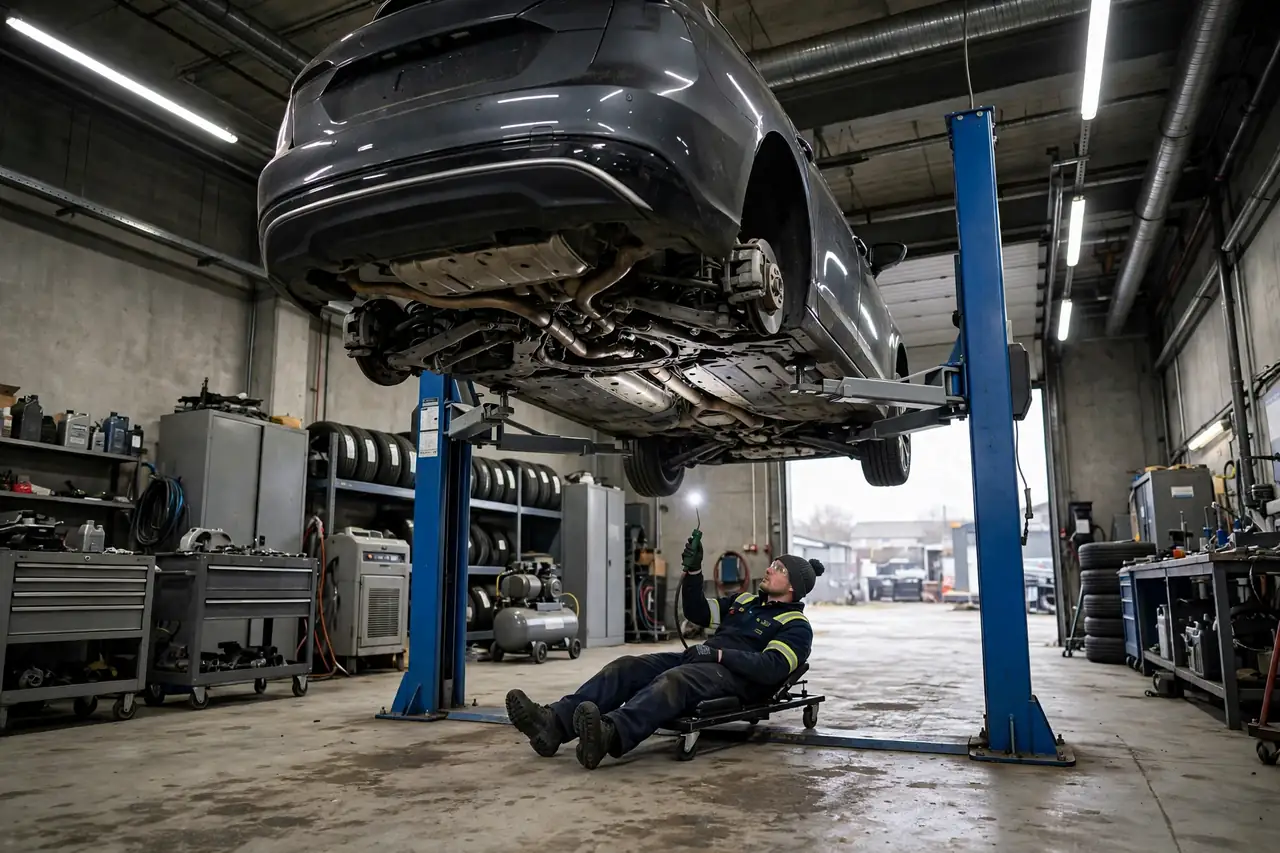

Keeping on top of your MOT and service schedule is the simplest way to keep a car safe, legal and cheaper to run. The two are often booked together, and for good reason: the MOT is a legal safety check, while a service is the maintenance that keeps the car passing year after year. This guide explains how they fit together, how to avoid missing your date, and what you can do between visits to keep bills predictable.
Why the MOT and Service Belong Together
The MOT test checks that your car meets minimum safety and environmental standards. It does not fix anything, and it does not look at the general mechanical condition of the engine or gearbox. A service, by contrast, is preventative: oil and filters are changed, brakes and tyres are inspected, and worn parts are flagged before they fail.
Booking both on the same visit saves time and often money, and it means the person servicing the car can deal with likely MOT failures before the test itself. Our overview of garage chains for UK drivers explains the difference between national chains and independent garages when choosing where to book.
Never Miss Your Date
Driving without a valid MOT is illegal and can invalidate your insurance. The easiest safeguard is a reminder: you can sign up for the free MOT reminder service on GOV.UK and receive a text or email before your test is due. Many garages also send their own reminders to regular customers, and adding the date to your phone calendar when you collect the car takes seconds.
Remember you can have the test done up to a month (minus a day) before the current certificate expires while keeping the same renewal date, which gives you time to fix any failures without the car being off the road.
What Testers Look At
The MOT covers lights, brakes, steering, suspension, tyres, seatbelts, mirrors, the exhaust and emissions, and the overall structure of the car. Most failures involve simple items such as bulbs, worn tyres and damaged wipers, which is why a few home checks before test day pay off. Walk around the car, test every light, check tyre tread and pressures, and top up the screenwash.
Tyres deserve particular attention, as they are checked for tread depth, damage and correct fitment. Our guide to tyre services explains what healthy tyres look like, and our piece on wheel alignment shows how poor alignment accelerates the wear that testers pick up.
Servicing Between MOTs
An annual service aligned with the MOT suits most drivers, but high-mileage cars may need interim attention. Following the manufacturer’s schedule protects warranties on newer cars, while older vehicles benefit from a pragmatic approach agreed with a garage you trust. Either way, keeping invoices and a stamped history supports the car’s value when you sell, as buyers of well-maintained used cars actively look for evidence of care.
If the combined annual bill feels lumpy, car service plans spread servicing costs across the year and can include the MOT, turning a surprise expense into a fixed monthly payment.
Understanding Failures and Advisories
A failure is not the disaster it first feels like. The tester will list the defects, and many are inexpensive: bulbs, wipers, tyres and minor brake work account for a large share. You can usually have repairs done and a partial retest carried out, often at reduced or no extra cost if you return within the set period and use the same test centre.
Advisories deserve as much attention as failures. They are the tester’s early warning of parts that are worn but still legal: brake pads thinning, slight corrosion, suspension bushes perishing. Dealing with advisories at your next service is almost always cheaper than waiting for them to become failures or, worse, breakdowns. Keep the certificates, as a file of passes with advisories fixed is exactly the history future buyers want to see.
Simple Checks Between Services
You do not need mechanical skill to protect your car between garage visits. Once a month, check tyre pressures and tread, engine oil and coolant levels, screenwash, and every light including number plate bulbs. Look under the car occasionally for fresh drips, and listen for new noises on familiar journeys.
These five-minute checks catch the issues that grow quietly: a slow puncture, a weeping hose, oil consumption rising. Finding them early turns a potential recovery-truck moment into a booked repair at a time that suits you, which is the whole philosophy behind combining maintenance with the annual test.
Keeping the Bill Fair
You are entitled to understand what you are paying for. Ask for an itemised estimate before work begins, agree that the garage will call before doing anything extra, and request the old parts back on bigger jobs if you want reassurance. A good garage welcomes those questions, because they protect both sides.
If your car fails and the quote seems steep, a second opinion is reasonable, particularly on structural or emissions work. What is not sensible is shopping around while driving a car that has failed on a dangerous defect: some failures mean the car should not be driven at all until repaired, and the tester will tell you if yours is one of them.
Electric and Hybrid Cars Still Need Checks
Electric cars are not exempt from the MOT, and while they have fewer moving parts to service, their tyres, brakes, suspension and cabin filters still need attention. Our guides to EV servicing and hybrid servicing explain what changes, and what does not, when your car has a battery and motor alongside or instead of an engine.
A Simple Year-Round Routine
Treat the MOT date as the anchor of your motoring year. Set the reminder, book the service at the same time, fix advisories promptly rather than letting them become failures, and do the five-minute monthly checks on tyres, lights and fluids. That small routine is the difference between motoring that feels like a series of emergencies and motoring that simply works.