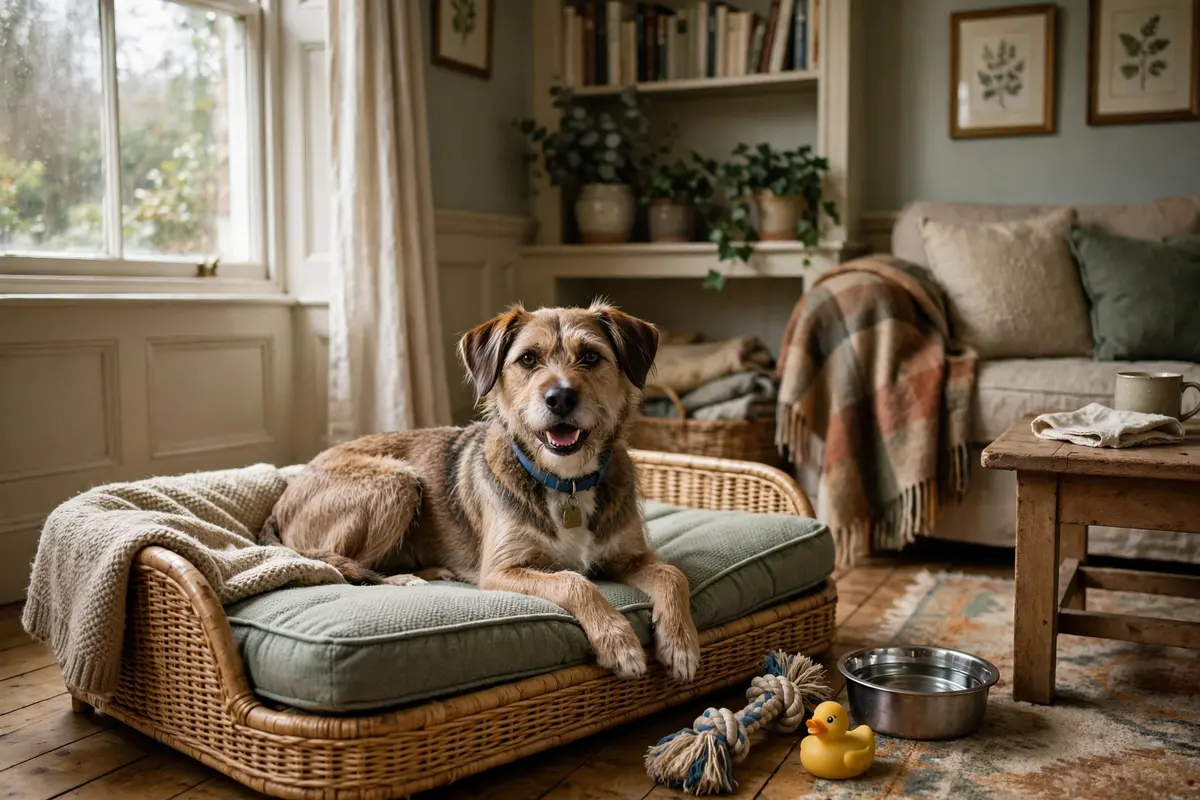

Bringing home a rescue dog is one of the most rewarding things a household can do, but the first month sets the tone for everything that follows. Your new dog is leaving a kennel or foster home and arriving somewhere full of unfamiliar smells, sounds and routines. Some dogs bounce in happily; others need days or weeks before they relax. With a little preparation and a lot of patience, bringing home a rescue dog becomes a calm, steady process instead of a chaotic one. Here is how to handle the first month well.
Before Bringing Home a Rescue Dog: Prepare Your Home
Start with the basics your dog will need from the first hour: a bed in a quiet corner, food and water bowls, a collar with an ID tag, a lead, and the food the rescue centre has been feeding. Changing food suddenly can upset a dog’s stomach, so switch gradually over a week if you plan to move to a different brand. Walk through your home at dog height and remove hazards: dangling cables, cleaning products within reach, small objects that could be swallowed, and blind cords — if your blinds have looped cords, the safer styles in our guide to curtains and window dressings for every room are worth considering before a curious dog arrives. If you have a garden, check fences and gates before the dog arrives — even a small gap is an escape route for a nervous newcomer, and secure outdoor space matters, as anyone planning garden and balcony furniture for UK homes quickly learns. Decide in advance which rooms are open to the dog and which are not, so the whole household applies the same rules from day one.
The First 48 Hours: Keep Everything Calm
The journey home and the first two days are about decompression, not entertainment. Resist the urge to invite friends round to meet your new dog, and keep introductions to household members quiet and brief. Let the dog explore one or two rooms at first, sniffing at its own pace, and show it where water, its bed and the garden door are. Short, frequent trips outside help toilet training click quickly. Many rescue dogs sleep a great deal in the first days; that is normal. A predictable pattern of meals, short walks and rest helps a dog understand that this strange new place is safe and permanent.
Building a Routine in Week One
Dogs settle fastest when life is predictable. Feed at the same times, walk at roughly the same times, and keep evenings calm. This is also the week to register with a local vet if you have not already, check when vaccinations and flea treatments are due, and make sure the microchip details are updated with your address and phone number — a legal requirement and the fastest route home if your dog ever gets loose. Keep walks short and local at first. Busy parks, pubs and high streets can wait until your dog has learned that you are the person to look to when the world feels overwhelming.
Settling In: Weeks Two to Four
By the second or third week, most owners see the dog’s real personality emerge — sometimes called the rule of threes: three days to decompress, three weeks to learn your routine, three months to feel fully at home. This is the time to start gentle training: recall in the garden, loose-lead walking, and simple cues like sit and wait, rewarded generously. If your dog is nervous about household noises, visitors or other dogs, build up exposure gradually rather than forcing encounters. Mud and hair are now part of daily life, so practical touches help — washable throws on sofas and hard-wearing rugs that cope with muddy paws save a lot of stress. Thoughtful room-by-room choices, like those in our UK home decor guide, can make a home both stylish and dog-proof.
What to Ask the Rescue Centre
Before the first month begins, the rescue centre is your best source of information, so use it. Ask what food the dog has been eating and how much, what its daily routine in kennels or foster care looked like, and how it has behaved around children, other dogs and cats if that was tested. Ask about any medical history, ongoing medication, and quirks the staff have noticed — a dog that hates having its paws touched or that panics at the vacuum cleaner is far easier to help when you know in advance. Most centres also offer post-adoption support, and there is no weakness in using it: a quick call about eating, sleeping or training worries in week one can stop a small issue becoming a big one. Write the answers down before you leave, because the excitement of collection day makes details easy to forget.
Common First-Month Challenges
Almost every rescue dog presents at least one puzzle in the first month. House-training accidents are normal while routines bed in; clean up calmly and increase trips outside rather than scolding. Some dogs guard food or toys because food was scarce before; feed them somewhere quiet and let them eat in peace. Barking at night usually fades as the dog learns the sounds of the house, and a worn item of clothing in the bed can help. If chewing becomes a theme, check your dog has enough suitable chew toys and mental stimulation before assuming stubbornness — boredom is the usual culprit. Persistent worries such as separation anxiety or aggression towards other dogs deserve proper help: ask your vet to recommend a qualified, reward-based behaviourist.
Sorting Insurance and Costs Early
The first month is also the sensible time to sort the practical money side. Many rescues send dogs home with a few weeks of free insurance cover, but that runs out quickly, so compare pet insurance policies before it lapses rather than after a vet bill arrives. Budget honestly for the ongoing costs: food, insurance, vaccinations, flea and worm treatments, toys, bedding and the occasional professional groom or training class. None of this should put anyone off adopting — it simply means the first month is planned with clear eyes, which is fairer on both you and the dog.
Looking Ahead Together
Once the first month is behind you, life opens up. You can plan longer walks, training classes and trips together — many owners find their rescue becomes the perfect companion for UK staycations and dog-friendly breaks. Keep building the routine, keep training in small daily doses, and keep in touch with the rescue centre if questions come up; good rescues are glad to support their adopters. Bringing home a rescue dog is not about having the perfect dog on day one. It is about giving a dog time, consistency and kindness — and watching trust grow week by week.