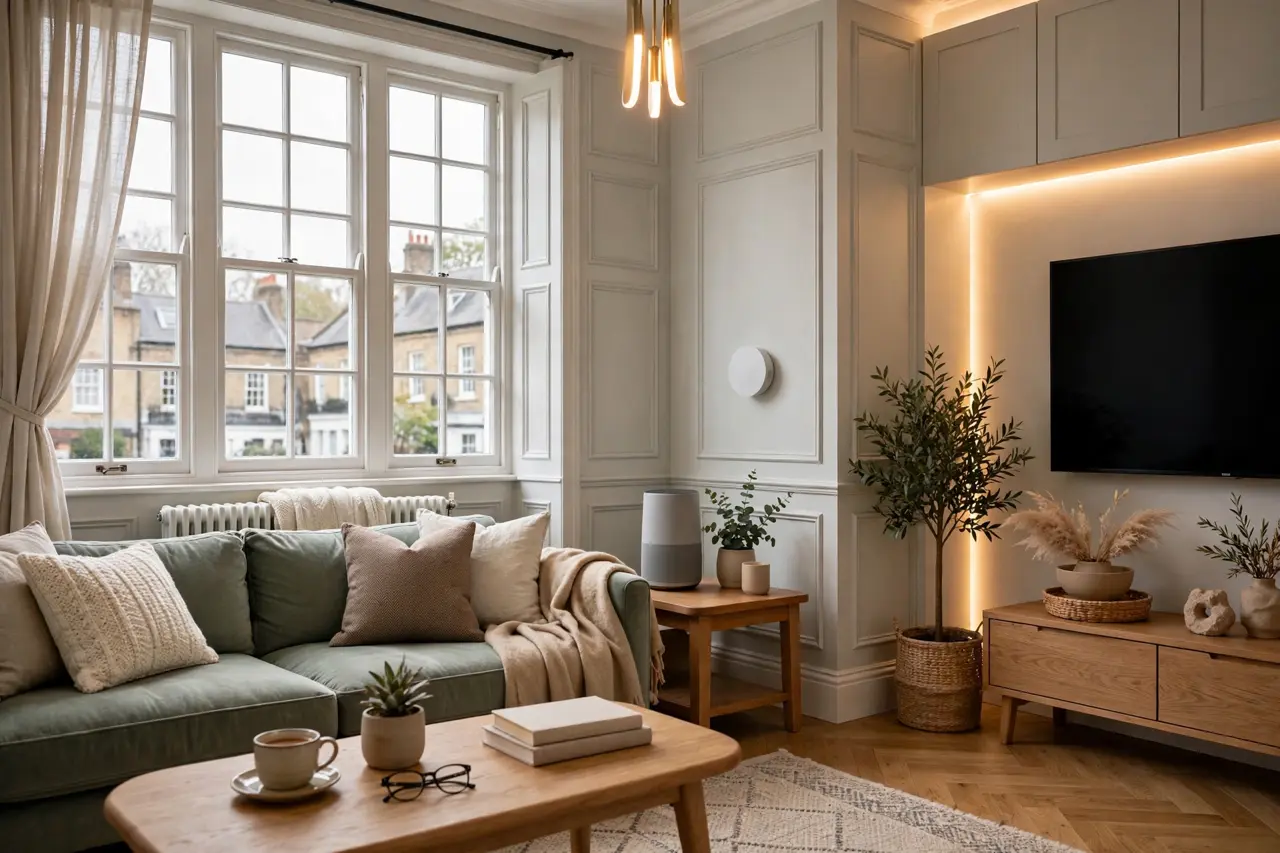

Smart home devices have moved from novelty gadgets to everyday essentials in British homes. What began with a voice-controlled speaker now extends to lighting that adjusts itself, heating that learns your routine and doorbells that show you who is outside while you are miles away. If you have been curious about home automation but unsure where to begin, this guide explains what the main devices do, what they cost to run and how to set up your first smart home without turning it into a part-time job.
The good news is that you no longer need a full renovation or a specialist installer. Most smart home devices connect over your existing Wi-Fi, are controlled from a single app or with your voice, and can be added one room at a time as your budget allows. Starting small and building gradually is not just cheaper; it helps you discover which technology genuinely improves daily life and which would only gather dust.
What counts as a smart home device?
A smart home device is any household product that connects to the internet or to a home hub and can be controlled remotely, automated on a schedule, or triggered by another device. Smart speakers and displays act as the control centre, taking voice commands and linking everything together. Around them sits a growing family of products: bulbs and plugs, thermostats and radiator valves, video doorbells and cameras, robot vacuum cleaners, smart locks and connected appliances.
The real magic is not any single gadget but how they work together. A “good morning” routine might open the blinds, switch on the kettle via a smart plug and read out the weather. A “goodnight” routine can lock the doors, dim the lights and lower the heating in one command. Once devices share the same platform, these small automations quickly become habits you rely on.
The best smart home devices to start with
Smart speakers and displays are the usual starting point. They answer questions, play music, set timers and control everything else by voice, and a small model is the cheapest way to test whether home automation suits you.
Smart lighting is the most satisfying early upgrade. Bulbs and switches let you dim lights from the sofa, schedule them while you are on holiday and change colour temperature from energising daylight in the morning to a warm glow in the evening. Pair them with your wider decorating plans and they can transform a room’s mood; our modern home decor ideas show how lighting choices shape the feel of a space, and smart bulbs make those effects adjustable at a tap.
Smart heating controls offer the biggest potential savings. A smart thermostat learns when the house is occupied, lets you turn the heating on from the train home, and stops you paying to warm an empty house. Zoned controls and smart radiator valves go further, heating only the rooms you use.
Video doorbells and cameras bring peace of mind. You can see and speak to callers from anywhere, check on deliveries and keep an eye on the house while you travel. Smart plugs deserve a mention too: the humblest device on this list turns almost anything with a switch, lamps, fans, even some older appliances, into part of your system for very little money.
Setting up your first smart home
Begin by choosing one ecosystem, typically built around the voice assistant you already use on your phone, and buy devices that work with it. This keeps everything in one app and avoids the frustration of gadgets that refuse to talk to each other. Start with one room, usually the living room, and live with the setup for a few weeks before expanding.
Your Wi-Fi matters more than any single device. Smart homes put dozens of connections on your network, so a reliable router, ideally with the option to place a mesh satellite near far rooms, prevents the dropouts that make people give up. When you arrange the room itself, think about where devices live permanently; pairing new tech with tidy cable management and the smart home storage ideas that keep chargers and hubs out of sight keeps the result looking intentional rather than improvised.
Name devices clearly (“hallway light”, “bedroom speaker”) so voice commands work first time, group them by room in the app, and set up two or three routines rather than twenty. Simple and reliable beats clever and fragile every time.
One more thing is worth checking before you buy: compatibility standards. Newer devices increasingly support Matter, a shared standard designed so products from different brands work together across the main platforms. Choosing Matter-compatible devices where you can protects your setup against being locked into a single brand, and makes it far easier to add different products later without starting again. It is a small detail on the box that makes a big difference two years down the line.
Finally, expect a short learning curve and do not let it put you off. The first week brings the occasional light that will not respond or a routine that fires at the wrong moment. These are almost always naming or Wi-Fi problems with simple fixes, and once the basics settle, most households find the system fades into the background, which is precisely the point.
Costs, privacy and staying in control
Entry costs are modest: a small smart speaker or a pair of smart bulbs can start a system for under £50, and most households build up gradually from there. Running costs are minimal for the devices themselves, though subscription plans for camera recording history are worth checking before you buy, so the ongoing cost never surprises you.
Privacy deserves a moment’s thought. Choose reputable brands, keep firmware updated, use strong passwords with two-factor authentication on your accounts, and review each device’s microphone and recording settings. Cameras belong at entrances and shared spaces, not private rooms. With those basics in place, the convenience of smart home devices comfortably outweighs the concerns for most households.
Taking it further
Once the basics are in place, the living room is only the beginning. Smart blinds, garden irrigation and outdoor lighting extend automation outside; our guide to garden and balcony furniture ideas pairs naturally with weatherproof smart lighting and speakers for summer evenings. Seasonal touches are popular too: automated plugs and scenes make festive displays effortless, as the displays in these Christmas lighting ideas suggest, and routines can adapt your living room ideas from film night to dinner party at a single command.
The smartest home is not the one with the most devices; it is the one where technology quietly removes friction from everyday life. Start with one room, solve one annoyance at a time, and let the system grow around the way you actually live. Within a few months, reaching for a light switch will feel strangely old-fashioned.