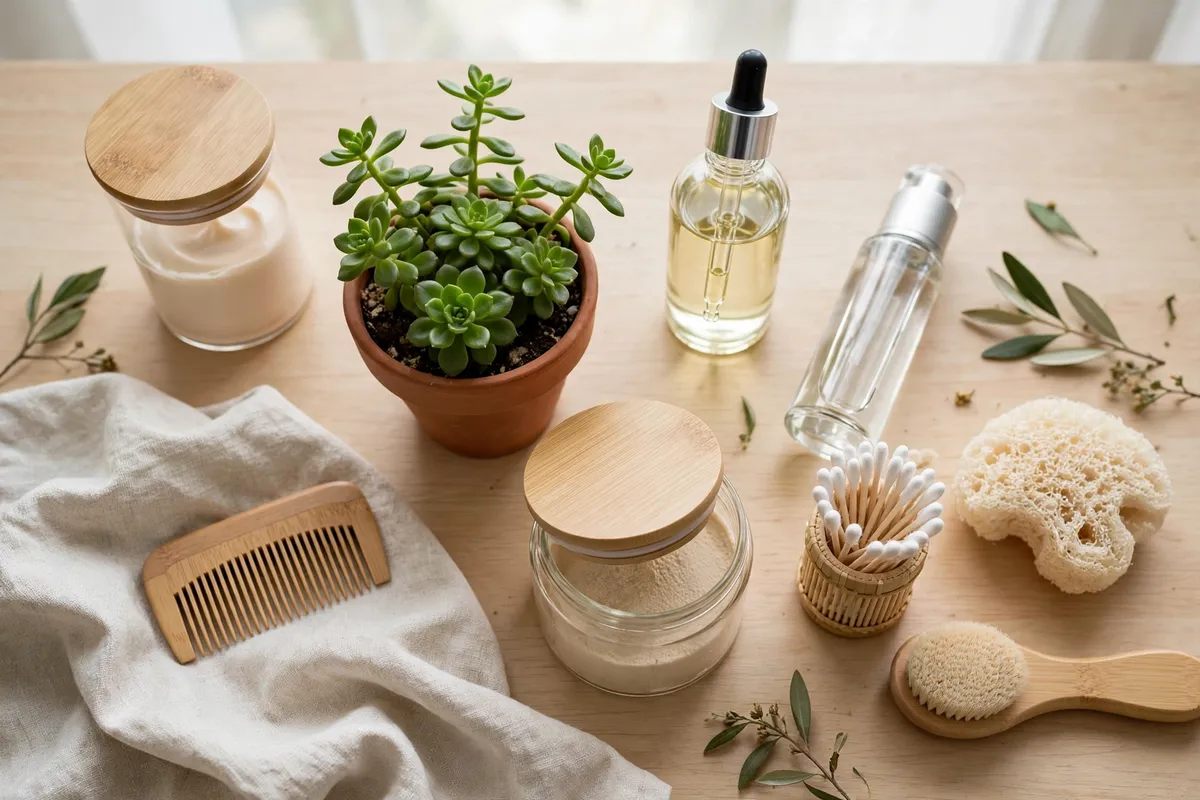

For many UK readers, sustainable beauty starts with a simple question: how can I enjoy skincare and make-up without creating unnecessary waste? It is not about perfection, throwing everything away and starting again, or buying a shelf full of new products with green labels. It is about making more thoughtful choices about what you buy, how it is packaged, where its ingredients come from in general terms, and whether you actually finish what you own. Done well, it can simplify a routine as much as it improves it.
In practice, green beauty is a collection of habits rather than a single standard. It might mean choosing a refill instead of a new bottle, checking whether packaging can be recycled at home, or pausing before a purchase to ask whether you need it at all. It also means noticing how British beauty culture and constant trends can encourage novelty for its own sake. This guide explains the practical side, without hype and without pretending that any routine can have no impact at all.
Key Takeaways
- Use what you already own first: finishing a product is often the most sustainable choice you can make today.
- Look for packaging that is refillable, reusable, widely recyclable or made with less material, and check what local recycling accepts.
- Treat vague words such as natural, clean and eco as a starting point for questions, not as proof.
- Choose sustainable skincare and sustainable cosmetics that suit your skin and routine, so you are more likely to use them fully.
- Think in circles: circular beauty means keeping products and packaging in use for longer and wasting less at the end.
What Sustainable Beauty Means in Practice
Sustainable beauty joins up several things that are often talked about separately. The product itself matters, including how well it works for you and how long it lasts. Packaging matters because bottles, pumps, tubes and compacts are usually thrown away while the memory of the product is still fresh. How and where you buy matters too, because delivery, returns and impulse purchases all add up. None of this needs to become a burden. The most useful approach is to look at your whole routine and improve the parts you can, step by step.
That is why eco friendly beauty is best understood as a direction rather than a badge. A routine becomes more sustainable when you buy fewer unnecessary items, choose products you will finish, favour packaging that can be refilled or recycled more easily, and support clearer information from brands. It becomes less sustainable when products are bought for a photograph, used twice and forgotten in a drawer. The bathroom shelf, rather than the marketing, is usually the best place to start.
Start With What You Already Own
Use It Up Before You Replace It
The simplest rule is also the easiest to overlook: use up what you have before you replace it. A half-finished moisturiser that is replaced by a greener alternative has still used resources to be made, packaged and delivered. Finishing it, where it is still safe and in date to use, avoids waste and gives you time to think about what you really want next. Check expiry guidance and period-after-opening symbols, store products away from heat and steam where you can, and stop using anything that smells, looks or feels wrong.
Using products up fully takes a little organisation. Keep everyday items where you will see them, rather than storing several similar products in different places. Cut open tubes only if you can do so safely and hygienically, stand bottles upside down where practical, and use a spatula or pump to reach the last of a product without contaminating it. If something does not suit your face, consider whether it can be used in another sensible way, such as a cleanser that works better as a hand wash, before deciding it is waste.
Buy Less, but Buy What Suits You
A smaller routine that fits your skin is usually better than a long routine copied from someone else. Before buying, ask what job the product needs to do, whether you already own something similar, and how it will sit alongside what you use now. This is particularly important for active skincare, where layering too many new products can lead to irritation and abandoned bottles. Our guide to beauty research explains why evidence and formulation matter more than a single fashionable ingredient.
Packaging and Refills: Looking Beyond the Bottle
Packaging is the most visible part of the problem, which is why sustainable beauty packaging gets so much attention. A well-designed pack protects the product, dispenses it without waste, and can be reused, refilled or recycled at the end. A poorly designed one may look appealing but use several materials bonded together, include parts that cannot be separated, or dispense far more than you need. Looks alone tell you very little.
What Better Packaging Can Look Like
In general terms, simpler is often better. Look for packs that explain clearly what they are made from and how to dispose of them, refillable outer cases designed to be kept, and concentrates or solid formats where they suit the product and reduce the need for a large bottle. Glass, metal and some plastics can each have a place, depending on the product, how it is used and whether the pack is reused. The key question is not which material sounds greenest, but whether the whole pack has been designed to be used many times or recycled in practice in the UK.
Making Refills Work for You
Refills only help if you actually use them. They work best for products you buy repeatedly, such as hand wash, shampoo, cleanser or a favourite refillable compact. Keep the original container clean and dry as directed, follow the refill instructions, and do not mix old and new product if the maker advises against it. If a refill system requires special journeys, bulky storage or packaging that is hard to recycle, weigh that up honestly. A refill habit that fits your normal shopping routine is far more likely to last.
Ingredients and Sourcing in General Terms
Ingredients are harder to judge than packaging, because a list on the back of a pack does not tell the whole story. In general terms, responsible sourcing means thinking about where raw materials come from, how they are grown or made, and whether the people and places involved are treated fairly. Brands that take this seriously tend to explain their approach in plain language, describe the limits of what they know, and avoid turning a single ingredient into a whole sustainability story.
For shoppers, a calm approach works best. Learn what common ingredients do, check whether a product is right for your skin, and be wary of long claims built on one fashionable component. Natural does not automatically mean gentler or lower impact, and synthetic does not automatically mean harmful or wasteful. What matters is the finished product, how it is made, how you use it, and whether you need it. Keeping a routine steady also helps: constantly switching sustainable cosmetics in search of a perfect ingredient list often creates more waste than it saves.
Your Beauty Carbon Footprint and Everyday Choices
Your beauty carbon footprint is shaped by more than the bottle in your hand. It includes making ingredients and packaging, transporting products, heating water for long routines, travelling to appointments, and disposing of what is left over. You do not need a calculator to make better choices. Shorter showers where practical, using the amount of product recommended rather than double, combining deliveries or shopping trips, and avoiding rushed returns all point in the same direction.
The same thinking applies to trends. Following every launch can mean a drawer full of near-duplicates. Reading about beauty trends in the UK can be enjoyable and useful, provided trends inform your choices rather than restart your routine each month. A product that earns its place and is used to the end will almost always be a better choice than a fashionable alternative bought on impulse.
How to Spot Greenwashing
Greenwashing is when marketing makes a product or brand sound more environmentally friendly than the evidence supports. It rarely involves an outright lie. More often it uses a leaf image, earthy colours, a single recycled component, or a vague claim to create a general impression of goodness. Words such as pure, clean and kind to the planet need detail behind them before they mean much, and a label that simply says eco friendly beauty is a claim to check, not a conclusion.
Questions to Ask Before You Buy
- What exactly is being claimed: the product, the packaging, the delivery, or the whole company?
- Is the claim specific and checkable, or is it broad and impossible to measure?
- Does the packaging explain how to reuse, refill or recycle it where you live?
- Is one small feature being used to distract from a large amount of waste elsewhere?
- Would I buy and finish this product if the green language were removed?
If the answers are unclear, pause. Look for fuller information on the pack or the brand’s own product page, and compare it with what you can verify. A trustworthy claim is usually modest, specific and easy to explain. A claim that relies only on mood, colour and a picture of a leaf deserves more caution. Zero waste beauty is a useful ambition for some products, but treat any suggestion that a whole routine has no impact at all with particular care.
Building a Simpler, Greener Routine
Start with one change at a time. Finish open products, note what you replace most often, and choose refills or simpler packaging for those items first. Keep a basic routine you enjoy, add new products slowly, and review your bathroom shelf every few months so forgotten items are used before they expire. Over time, this creates a form of circular beauty at home: products stay in use, good containers are kept, and purchases become deliberate rather than automatic.
Remember that sustainable beauty should still be a pleasure. Perfume, make-up and skincare are part of self-expression and care, not a test you can fail. The aim is not to feel guilty about every purchase, but to buy with clearer information, waste less of what you buy, and choose packaging and products that are designed with their next use in mind. Small, repeated habits are what make the difference.
Frequently Asked Questions
What is sustainable beauty in simple terms?
It means enjoying skincare, make-up and toiletries while wasting less: buying what you need, using it fully, choosing packaging that can be refilled, reused or recycled more easily, and asking for clearer evidence behind green claims.
Is refillable packaging always better?
Not always. A refill helps most when you keep and reuse the main container many times and the refill itself uses less packaging. If you rarely repurchase the product, a simple, widely recyclable pack may be the more practical choice.
How can I make my routine greener without replacing everything?
Start by using up open products, then replace your most-used items with refillable or simpler-packaged versions one at a time. That avoids waste, spreads any change gradually, and shows you which habits you will actually keep.
What is the easiest way to spot greenwashing?
Look for vague words without detail. Ask what exactly is sustainable, how the packaging should be disposed of in the UK, and whether the claim covers the whole product or only a small part of it.