
Shopping for skincare and make-up in the UK increasingly starts with a phone camera, a short quiz or a chat window rather than a counter. The growth of AI in beauty industry tools reflects that shift. Retailers, salons and online stores now use software that can study a selfie, suggest a foundation shade or recommend a routine in seconds. Used well, it makes choosing products simpler. Used carelessly, it can mislead, so it helps to understand what it does and where its limits lie.
This guide explains, in plain language, what AI beauty UK shoppers encounter when they open a retailer app or website, from skin analysis to virtual try-on. It also covers the business side, and the questions around privacy, bias and human judgement that are worth asking before you trust an automated suggestion.
Key Takeaways
If you only remember a few points about artificial intelligence beauty tools, make it these.
- AI can analyse a photo of your skin, match a foundation shade and preview make-up on your own face before you buy.
- Personalised suggestions are only as good as the answers and images you provide, so honest inputs usually give better results.
- Virtual try-on and shade matching are best used to build a shortlist, not as a final guarantee of how a product will look.
- Your photos and personal details are data. Always check what a service does with them before you upload a selfie.
- Human advice still matters most for sensitive skin, allergies, medical concerns and careful in-person colour assessment.
What AI Actually Does in Beauty
Put simply, AI in beauty industry services means software that learns patterns from large amounts of information, then applies those patterns to a new situation. In beauty, that information often includes photographs of skin, product descriptions, ingredient lists and answers to questionnaires. The software looks for links, for example between how skin appears in particular light and how a shade is described, then makes a prediction or a suggestion.
It helps to keep that definition in mind. AI beauty technology does not understand your skin in the way an experienced adviser does. Instead, it compares what you show it with patterns it has seen before. When your situation matches familiar patterns, the suggestion can be genuinely useful. When it does not, the result can be wide of the mark. For that reason, the most trustworthy services present AI as help with choosing, never as a diagnosis or a promise. The spread of AI in beauty industry services is therefore best understood as a change in how advice is delivered, not as a replacement for expertise.
How AI Skin Analysis Works
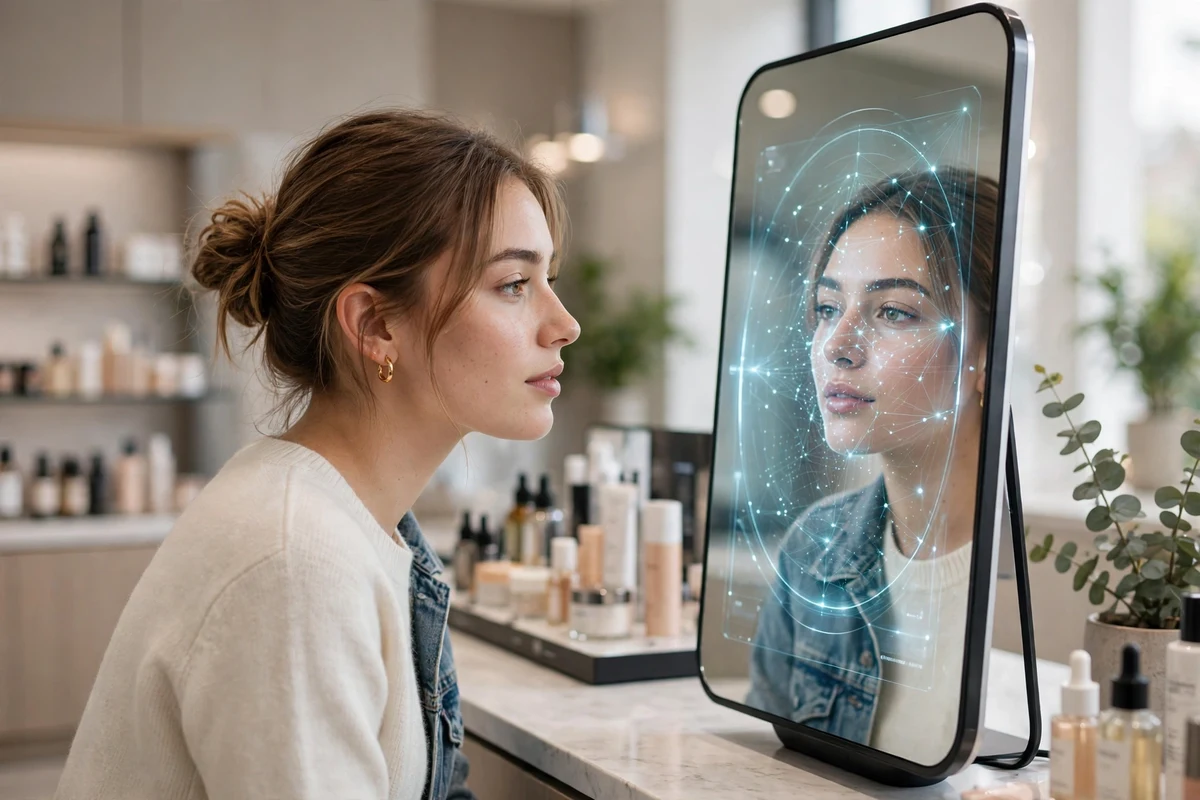
Most AI skincare tools begin with your phone camera. You take a selfie, usually in natural light and without make-up, and the software examines areas of the image for visible features such as shine, dryness, uneven tone, blemishes and fine lines. Some tools also ask questions about your age range, skin type, concerns and current routine, and they combine those answers with what the image appears to show.
The result is normally a summary of your skin’s visible condition, followed by product suggestions chosen to match it. In shops, similar analysis may be offered on a tablet or mirror at a beauty counter, with a member of staff talking you through the findings. At home, the same process happens in an app or a browser, and the suggestions usually link straight to products you can buy. Skin analysis has become one of the most visible parts of AI in beauty industry retail because it turns a general browse into something that feels personal from the first minute.
What Skin Analysis Can and Cannot Tell You
A photo can show surface appearance, but it cannot show everything. Lighting, camera quality and filters can all change the result, and a tool cannot feel texture, ask follow-up questions or spot a medical problem in the way a professional can during a consultation. Treat the findings as a starting point. If a tool claims to diagnose a skin condition, or pushes you towards a treatment for it, that is a reason to pause and seek qualified advice instead.
Shade Matching and AI Cosmetics
Finding a foundation or concealer shade that truly matches your skin is a familiar frustration, especially when you shop online. That is where AI cosmetics tools try to help. You upload a photo or answer questions about shades that have suited you before, and the software estimates your skin tone and undertone, then suggests the closest matches in a range.
Good shade matching can save time, reduce wasted purchases and make returns less likely. It is not foolproof, though. A photo taken in warm indoor light can look quite different from one taken beside a window, and screens themselves vary. Many shoppers therefore use the match as a shortlist, then test the leading options on the jawline in daylight where possible. Shade matching is a practical example of AI in beauty industry problem-solving at its simplest: a small, specific task done quickly.
Virtual Try-On: Trying Before You Buy
Virtual try-on uses your camera and augmented reality to place make-up on a live image of your face. You can see how a lipstick, eyeshadow or blush might look, change shades with a tap, and compare options side by side without opening a tester.
The strength of try-on is confidence. It helps you rule out shades that clearly do not work and explore bolder colours you might hesitate to test in a shop. Its weakness is accuracy. Texture, finish and the way a shade settles on real skin are hard to reproduce on a screen, and lighting still matters. For many shoppers, virtual try-on has become the most enjoyable face of AI in beauty industry shopping, provided they treat the preview as a guide rather than a guarantee.
Personalised Recommendations That Learn From You
Quizzes are the other common route to personalisation. You answer questions about your skin, hair, budget, preferences and the results you want, and the service builds a routine or a shortlist around your answers. Some retailers then refine those suggestions over time, using what you view, buy, rate or return. Done well, AI beauty recommendations feel less like advertising and more like a knowledgeable assistant who remembers your preferences.
The quality of the result depends on the quality of the input. Vague answers produce generic suggestions, and a routine built around one concern may ignore another that matters just as much. It also helps to revisit your answers when your skin, hair or circumstances change. Personalisation is where AI in beauty industry services can genuinely save time, because they narrow thousands of options to a manageable few. Even so, you stay in charge: a recommendation is an invitation to consider a product, not an instruction to buy it. To see how evidence should sit behind product claims, read our guide to beauty research.
The Business Side of AI in Beauty Industry
Behind the scenes, AI beauty business tools help retailers and brands with far more than product matching. They can forecast demand, plan stock, personalise offers, power chat assistants that answer routine questions, and flag reviews or feedback that need a human response. Salons and clinics use booking and consultation software that organises client information and appointment histories. In a market as varied as London beauty, where independent specialists sit alongside large retailers, those efficiencies can decide whether a small business keeps up. The same tools are spreading through the wider British beauty culture of high streets, salons and online stores across the UK.
There are risks on this side too. Automated replies can frustrate customers when a problem needs empathy or discretion. The businesses that use AI best tend to be open about it. They let customers know when they are talking to software, they keep a human route available, and they use automation for routine tasks so that staff can spend more time on advice, treatments and service. For the AI in beauty industry story, that balance between efficiency and trust is the part customers remember.
AI Beauty Industry Trends in the UK
Looking ahead, AI beauty industry trends in the UK point towards tools that combine several jobs in one place: analysis, matching, try-on and advice in a single app or shop visit. Voice and chat assistants are becoming a normal way to ask product questions, and in-store mirrors and consultations increasingly blend digital analysis with staff expertise. Another clear direction is better shade ranges and testing across a wider variety of skin tones, driven by customer demand for tools that work for everyone. To compare these developments with the wider market, see our overview of beauty trends UK.
The Limits: Privacy, Bias and Accuracy
Every benefit described above depends on data, and that is where the limits begin. A skin analysis needs your photograph. A recommendations service needs your answers, and often your buying history. Before you upload a selfie, check what the service says about storing images, sharing information and deleting your data, and look for clear consent choices rather than a single take-it-or-leave-it screen. If a service cannot explain its data use in plain language, choosing a different provider is reasonable. Reading the key points yourself still matters.
Bias is the second limit. Software learns from the information it is given, so if that information under-represents certain skin tones, ages, skin conditions or hair types, the results can be less accurate for those people. Shade libraries that stop early, analysis that misreads deeper skin tones in poor light, and recommendations that assume one hair type are all examples of the same underlying problem. Good providers test their tools across diverse groups and publish clear ways to report a poor result.
When Human Advice Still Matters
Human advice still matters most where judgement, safety or reassurance are involved. Speak to a qualified professional about persistent skin problems, allergic reactions, prescription products or any treatment that breaks the skin. In person, an adviser can examine your skin in natural light, ask about your health and history, and notice things a camera misses. AI in beauty industry tools work best alongside that expertise, handling quick, routine decisions and leaving complex ones to people.
Frequently Asked Questions
Short answers to common questions about AI in beauty industry tools.
Is AI skin analysis accurate?
It can give a useful picture of visible features such as shine, dryness and uneven tone, but lighting and camera quality affect the result. Treat it as guidance, not a diagnosis, and seek professional advice for ongoing skin concerns.
Can virtual try-on replace testing a product in a shop?
Not completely. It is excellent for comparing shades and ruling out poor matches, but texture, finish and wear are hard to judge on a screen. Test your final choice in natural light when you can.
Is my photo shared when I use a beauty app?
It depends on the service. Check its privacy information for how images are stored, used and deleted, and only upload photos to services that explain this clearly and ask for your consent.
Does AI work for all skin tones?
Accuracy varies. Well-tested tools cover a wide range of tones, but some perform less well for under-represented groups. If a match looks wrong, trust your own judgement and ask for human help.
Will AI replace beauty advisers?
Unlikely. AI handles quick, routine tasks such as shortlisting shades and products. Advisers, therapists and clinicians still provide the judgement, reassurance and hands-on expertise that software cannot.